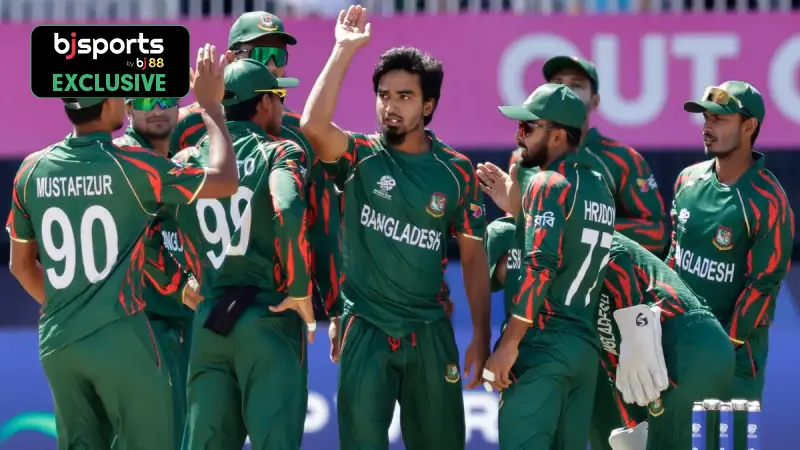
It wasn’t just the scoreboard that failed to provide any life in Mirpur; it was the stands, the air, even the vendors of flags outside the Sher-e-Bangla. A few years ago, you couldn’t purchase a ticket for a Bangladeshi ODI without selling your soul (or your scooter). Now, a scalper’s 300-taka ticket can’t even sell for 350. Inside, Bangladeshi cricket fell flaccidly to a further sub-250 total, their top order collapsed like wet paper, and their “modernised” plan looked as antiquated as the bulbs around the scoreboard.
When 250 Feels Like a Time Machine
Once upon a time, winning scores like 250 were possible in Mirpur, just ask Mashrafe’s 2015 team, who intimidated teams with discipline and dew. But in modern one-day cricket, the mathematics has changed. Since the 2023 World Cup, the average winning score for teams batting first in top-class ODI fixtures is well in excess of 300. Even Afghanistan has adapted by chasing down 300-plus totals successfully. The Bangladeshis are still building their innings as if 1999 never ended.
It is more than just skill, of course, but mindset. This is a team now playing to “survive” rather than “accelerate”. Earlier in the year, against Afghanistan, they were twice bowled out in less than 30 overs. And when Miraz’s men finally made it to the 40th over in Mirpur, they were 140 for 4, doing neither collapsing nor contesting. Safety-first batting has become the cricketing comfort blanket for Bangladesh, and it is squeezing them.
Pitches That Protect Pride, Not Progress
If the batsmen’s attitude has a sense of antiquity about it, the pitches are of a primeval type. The wicket at Mirpur, dark, low, and inanimate, seems to have been constructed for temporary comfort rather than future progress. Certainly, it may help Bangladesh to win one or two bilateral series. But in the larger picture? It is a slow death sentence to be executed on their ODI development.
Middle-Order Mayhem and the Myth of “Saving Wickets”
It was a 71-run partnership between Najmul Hossain Shanto and Towhid Hridoy. Which, on face value, looks solid enough. But look a little closer at the footnotes, and it will show you that it took them 120 balls to put on 71. That is an ODI strike rate of 59 in the year 2025. When even a debutant like Mahidul Ankon (46 off 60) showed more intent, it indicates how much the guardians of the game are in a dominating cocoon, leading to scare tactics. Miraz himself hit: 17 off 27, thus summing it up: a team too afraid to express themselves even when the door is open.
By the 40th over, Bangladesh had wickets in hand but no plan in mind. They scored just 67 in the final ten, the worst possible ODI paradox: you’re batting for the 50th over but don’t make that far. The “conserve now, explode later” strategy can only work if there is the ability to explode. The late-over hitting of Bangladesh at present depends upon Rishad Hossain’s cameos. This is not a sustainable plan if the top six batsmen bat as if it is a 1990s Test.
The Fans Have Left the Building
If you want to know the health of Bangladesh cricket, look no further than the empty stands in Mirpur. No longer do the crowd who lived or died with every Tamim flick and Shakib spell want to go to the games. They’ve become disillusioned. “What’s the point of waving a flag around when no one believes the team can win?” asked one vendor. It’s more than disillusionment. It’s an aching heart.
For the truth of the matter is, modern-day ODI cricket does not reward mere survival; it rewards courage. Until this lesson is learned by Bangladesh, their victories will continue to sound a worn-out note and their defeats an echo of the past.
Key Takeaway:
Bangladesh’s ODI problem isn’t form. It’s philosophy.
FAQs
1: Why is Bangladesh’s ODI batting approach being criticized?
It relies on outdated, defensive tactics instead of adapting to modern high-scoring ODI trends.
2: What’s wrong with the Mirpur pitch?
It favors slow, low-scoring cricket that hides Bangladesh’s batting flaws instead of preparing them for global conditions.
3: How does Bangladesh’s ODI strategy compare to the top teams?
While top sides target 300–350 totals, Bangladesh still treats 250 as a “safe” score.
Disclaimer: This Exclusive News is based on the author’s understanding, analysis, and instinct. As you review this information, consider the points mentioned and form your own conclusions.
 Predicted Playing XI of Sri Lanka in 2nd T20I against England
 Predicted Playing XI of England in 2nd T20I against Sri Lanka
 Top 3 player battles to watch out for in Match 35 of CPL 2026 between Barbados Tridents and Guyana Amazon Warriors
 Top 3 bowlers to watch out for in Match 35 of CPL 2026 between Barbados Tridents and Guyana Amazon Warriors