If you watched the India vs West Indies match from Ahmedabad, you’ll agree that the Test match concluded very quickly. It was faster than a T20 and a Test match that used a time machine. India won by innings and 140 runs at Narendra Modi Stadium.
Jurel: Not just a keeper, a bona fide middle-order bat

Dhruv Jurel’s first Test century stole the headlines, for good reason, a delightful 125 off 210 balls that balanced patience and the occasional authoritative smack, rocketing to 15 boundaries and three sixes – stitching an enormous partnership with Ravindra Jadeja that put the game wide open. His glovework was tidy and assured; he had quick lateral movement and safe hands, providing cover for the side while Rishabh Pant remained on the bench. That dual skill set – keeper-batter who can bat high up the order, suddenly becomes a selection headache in a good way for India.
Siraj’s rhythm and the art of the wobble seam

Mohammed Siraj, fresh from his heroics in England, maintained that aggressive intensity and finished with seven wickets for the match, a reminder that Test pace is more than just pure speed, but rather accuracy, movement, and manipulation with the seam. He used the wobble seam and slight lateral movement to nip edges and create soft dismissals; at a venue he knows well from IPL days, Siraj’s lengths stuck at the West Indies top order until they broke. This outing reinforces India’s seam bench strength and affords Rohit and the selectors some glad trouble to have.
Sai Sudharsan: a reality check, not a verdict
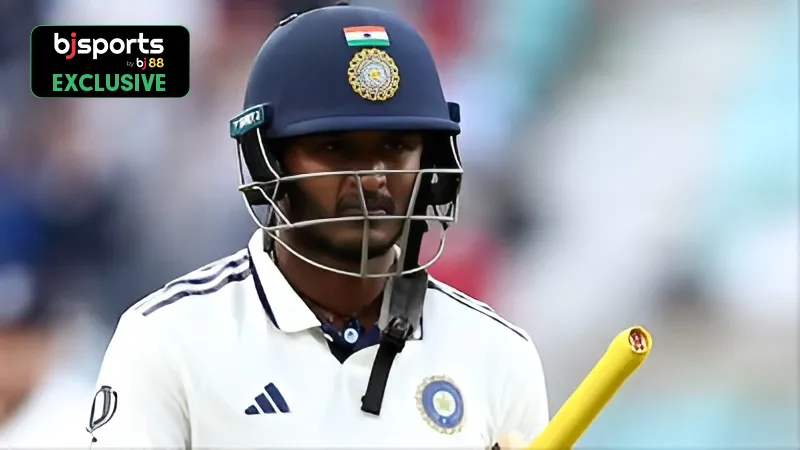
Sai Sudharsan’s seven was a brief but appropriate commentary – a warning that young talent can find themselves exposed in international cricket when the elements of pressure and conditions meet. He appeared a bit tentative, misjudging a pitched-up ball on a turning off-break and over-committing on an attempted pull, it’s a simple ‘fix’ in theory (games, more red ball time, breathe) but harder in practice. As with all potential selectors, selectors need to find a balance between patience and responsibility: Sudharsan does need to start producing runs in red-ball cricket eventually to keep his spot; one cheap score isn’t the end of the world.
From Jurel’s guarantee to Siraj’s seam shaping and Sudharsan’s wobble, Ahmedabad summed up modern Indian Test cricket in a tidy microcosm: depth, variation, and the reminder that, despite the talent, they may need to be seasoned. India’s batting is now deeper, the pace battery is thirsting for more, and some kids need to do their homework. The next test takes place in New Delhi on October 10; expect minor adjustments and major discussions. Which of these strikes you as most valuable: the long-term case for Jurel, the continuing ascent of Siraj, or Sudharsan’s learning experience? Let me know in the comments, and if you wish, I can develop a predicted XI for New Delhi with Jurel, Siraj, or another selection, and fan reactions.
FAQs
1. Who was India’s standout performer in the first Test against the West Indies?
Dhruv Jurel shone brightest with a maiden Test hundred and sharp wicketkeeping.
2. How many wickets did Mohammed Siraj take in the match?
Siraj picked up seven wickets, including a crucial four-fer in the first innings.
3. Why is Dhruv Jurel’s performance significant for India?
He showed he can be both a reliable middle-order batter and a dependable keeper.
Disclaimer: This Exclusive News is based on the author’s understanding, analysis, and instinct. As you review this information, consider the points mentioned and form your own conclusions.
 Predicted Playing XI of Sri Lanka in 2nd T20I against England
 Predicted Playing XI of England in 2nd T20I against Sri Lanka
 Top 3 player battles to watch out for in Match 35 of CPL 2026 between Barbados Tridents and Guyana Amazon Warriors
 Top 3 bowlers to watch out for in Match 35 of CPL 2026 between Barbados Tridents and Guyana Amazon Warriors