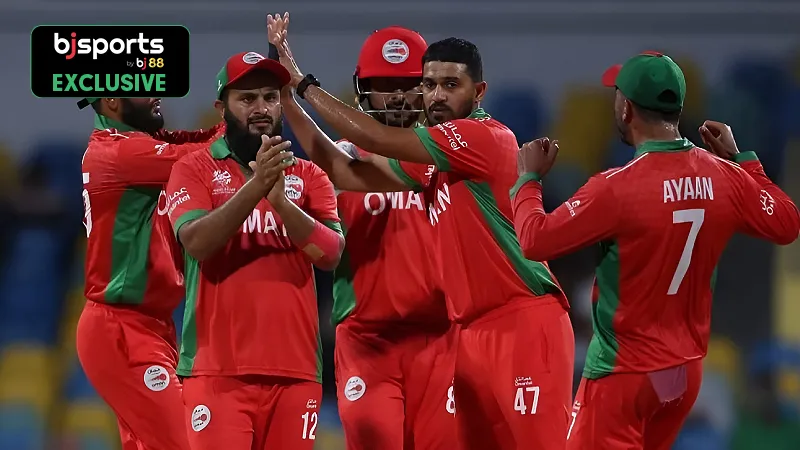
Dubai glistened like the bright, luminescent city it is, but if you were an Oregon fan, the evening would have felt like an empty mirage on a sunny day — promising from afar, void when you got close enough to touch it. Chasing 161 runs, Oregon began with the hope of a bright beginning, only to find themselves never in sync. Jatinder Singh out first ball, Aamir Kaleem out two soon after, and any chance of chasing down what looked like a still manageable target swiftly turned into a rout.
Batting implosion and absence of partnerships
The simple answer is this: Oman fell in a heap with the bat. Early wickets completely changed the dynamics of the chase – 24 for 2 in the first two overs to 49 for 6 inside ten, and instead of the chase falling in one sustained partnership, it fell in fragments. Hammad Mirza’s 27 produced some resistance, not partnerships; all they want translated into loose shots and soft dismissals. When you’re chasing singles, rotating the strike is the currency in building a chase. Oman, however, was intent on swinging well for the boundaries that became wickets, preventing any batter from settling. The ten wickets lost for 67 means losing a few bad balls – a failure of strategy and application.
Pakistan’s game-changer, Mohammad Haris, and timely cameos
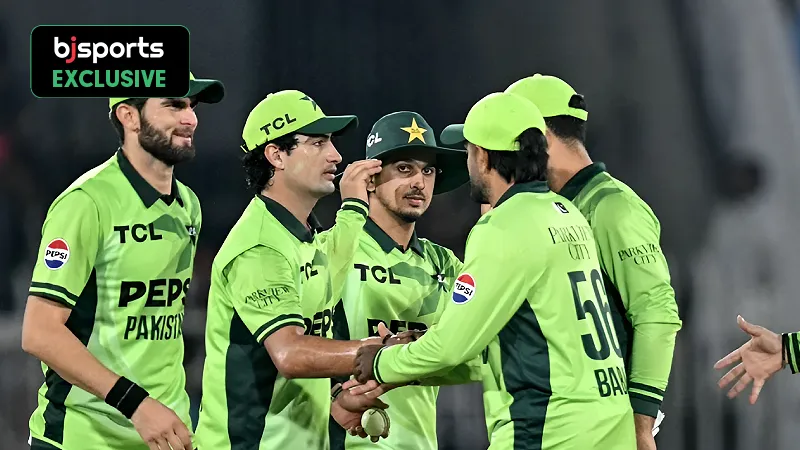
Mohammad Haris stamped his authority all over the night with an extravagant 66, which defined the pace and forced Oman onto the back foot. His strike rate of 153.48 and bewitched ability to rotate the strike allowed Pakistan to create a total that felt dominating rather than just adequate. Fakhar Zaman’s late spurt and Mohammad Nawaz’s whirlwind cameo also aided the propulsion and began to build a total that, through psychological weight, felt oppressive. Haris was intent on the narrative and applied timing; once a team is placed inside that narrative, it chases instead of competes. Oman never regained that narrative control. Once Pakistan’s bowlers saw Oman behind an imposing total, they fed off that cushion and bowled disciplined areas, feeding into the singles Oman needed to create any narrative.
Tactical missteps, fielding, and inability to adapt
Oman obviously displayed tremendous individual talent. However, tactically, it was a struggle. As their bowlers were able to make inroads and take important wickets intermittently through the crisp bowling of both Shah Faisal and Aamir Kaleem, Oman were unable to put pressure on Pakistan’s batsmen by combining strong fielding with clever changes in bowling. A run-out and a few misfields resulted in them losing momentum and putting too much pressure on the batsmen. When the middle-order batsmen faced a variance in pace, spin, and change-ups, there appeared to be no avenues open. Instead of working singles or trying to rebuild their chase, they grabbed at reckless aerial shots that had slim chances of success. In T20, tactics and improvisation matter as much as skills, and under the pressure of the scoreboard, Oman had neither.
FAQs
1: What was the final result of the Pakistan vs Oman match?
Pakistan won by 93 runs, bowling Oman out for 67 while defending 160.
2: Who was the Player of the Match?
Mohammad Haris was awarded Player of the Match for his 66 off 43 balls.
3: What was Oman’s biggest weakness in the game?
A complete batting collapse with no meaningful partnerships.
 Top 3 Bowlers to Watch Out for in Test Series Between Bangladesh and the West Indies
 Predicted Playing XI of Bangladesh for First Test Against West Indies
 Predicted Playing XI of Sri Lanka in 5th Match of Tri-Series Against Pakistan
 Predicted Playing XI of Pakistan in 5th Match of Tri-Series Against Sri Lanka