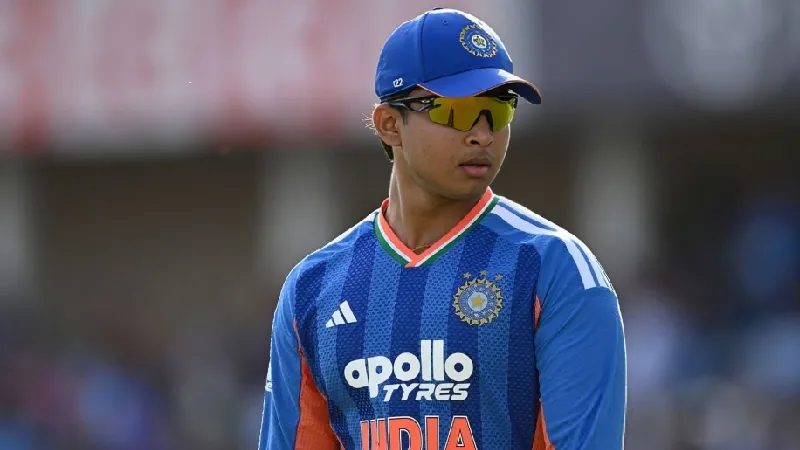
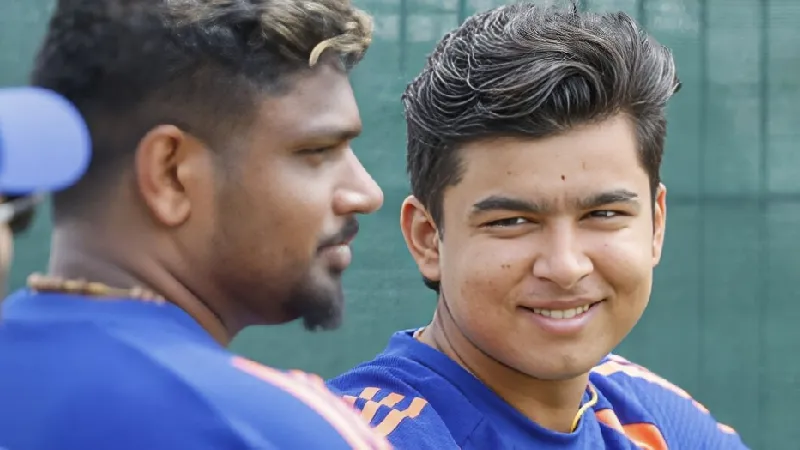
Vaibhav Sooryavanshi (Photo by Gareth Copley/Getty Images)
In Auckland on October 30, India’s fourth T20I against New Zealand became a dead rubber after the visitors had already secured the series by winning the first three matches. Vaibhav Sooryavanshi, the young opener who had stepped in as a replacement when Ishan Kishan suffered a low-grade right adductor strain after the first T20I, found himself dropped from the playing XI once the wicketkeeper-batter recovered and returned to the squad.
Sooryavanshi had contributed scores of 4 and 45 across his two outings in the second and third T20Is, showing promise. His omission sparked debate about the team’s approach to managing emerging talent, particularly when squad changes coincided with a match that carried no bearing on the series outcome.
Chopra elaborated on the philosophical question surrounding Sooryavanshi’s role in the squad. The former India opener acknowledged that logically, if Kishan’s fitness returned, Sooryavanshi would be the natural candidate to make way, having arrived as an injury replacement. However, the timing raised questions about the team’s broader strategy.
“Last match, Abhishek made 100 and Vaibhav missed his 50. But the batting was very good. After that, the question was, if Ishan is fit, who will go out. If you think philosophically, then the answer is Vaibhav Sooryavanshi since he replaced an injured Kishan. But this was a dead rubber,” Chopra said.
Kishan’s return proved disappointing as he fell for a duck while attempting to chase New Zealand’s total of 260 runs. India’s reply fell short at 172 for 9 wickets, leaving the fourth match as a lost encounter in an otherwise successful series.
Chopra pressed further on the broader implications of Sooryavanshi’s omission, questioning whether the young batter would only feature when injuries forced his selection. He suggested that clarity from the team management was essential regarding Sooryavanshi’s long-term role and development pathway.
“The decision to drop Vaibhav Sooryavanshi leads to a bigger question. Will you play Vaibhav Sooryavanshi only when someone is injured? Or when someone is unavailable? If that is the case, you can send him home,” Chopra said.
“You can tell him to go and play first-class cricket. Of course, he can learn by staying in the Indian dressing room. But if it’s happening for an extended period, he should get bat on ball,” he added.
Chopra concluded by calling on the team management to communicate its strategic vision for Sooryavanshi’s future in the squad. He expressed disappointment at the lack of transparency surrounding the youngster’s role and selection criteria.
“The team should come out and share what their roadmap and philosophy is. Maybe they have already thought about it and have already charted out a plan. But they haven’t told anybody. As such, we don’t know what they are going to do with Vaibhav Sooryavanshi. His absence was a little disappointing,” Chopra said.
Disclaimer: This latest news is based on the author’s understanding, analysis, and instinct. As you review this information, consider the points mentioned and form your own conclusions.
 Who is the most dangerous T20I batter at the moment? Harry Brook or Abhishek Sharma? Subramaniam Badrinath answers
 Kagiso Rabada reaches 350 Test wickets, becomes second fastest Proteas bowler to do so
 Nitish Kumar Reddy’s 64-run spell puts him in unwanted T20I company
 Dinesh Karthik suggests rotation strategy to fit Sooryavanshi and Samson together in India’s XI