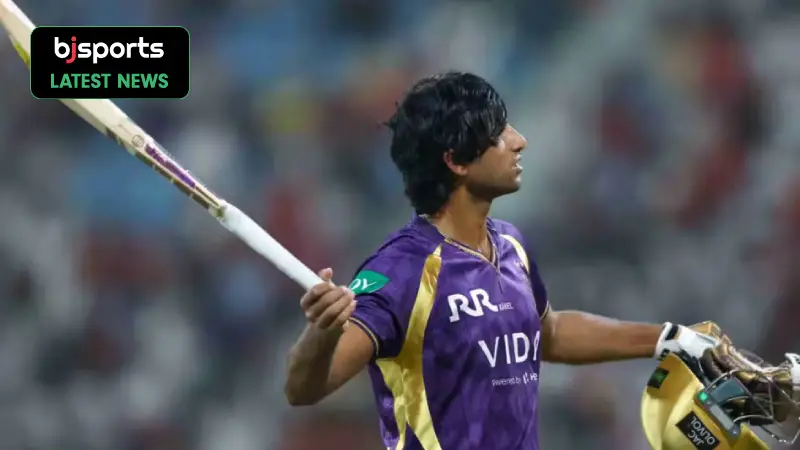
The Marylebone Cricket Club (MCC) has issued a clarification on the ‘Obstructing the Field’ law following the debated dismissal of Angkrish Raghuvanshi during the Indian Premier League 2026 clash between Kolkata Knight Riders and Lucknow Super Giants.
Raghuvanshi attempted a quick single but was sent back by his batting partner. As he turned and dived to regain his crease, a throw from the field struck him, prompting an appeal from the fielding side. After review, the third umpire adjudged him out for obstructing the field, sparking widespread debate about the rule.
In its clarification, the MCC reiterated that under Law 37.1.1, a batter can be given out if they wilfully attempt to obstruct or distract the fielding side by word or action. The key factor, therefore, is the intent behind the movement, making such decisions highly dependent on interpretation.
“A batter who changes direction while running, particularly one who changes direction to run on the pitch, or takes any other route that would not be the quickest way to the other end, is making a wilful act,” MCC wrote.
The governing body referred to Tom Smith’s Cricket Umpiring and Scoring guide. According to this, a batter who alters their running path, especially by moving onto the pitch or deviating from the most direct route, can be deemed to have made a deliberate attempt to obstruct.
Explaining Raghuvanshi’s case, the MCC noted that he initially ran on the off side but later moved towards the middle of the pitch before turning back on the leg side. This movement effectively placed him in the line between the ball and the stumps, which qualifies as a wilful act under the law.
The MCC further clarified that had Raghuvanshi maintained his original running line, either on the off side or leg side, and the ball still struck him, he would likely have been deemed not out. However, his decision to cross the pitch was considered a decisive factor in the ruling.
Addressing another point of contention, the MCC emphasised that the likelihood of the batter making it safely to the crease is irrelevant in such cases. Unless the act involves preventing a catch, the potential outcome of the play does not influence the decision under the ‘Obstructing the Field’ law.
Disclaimer: This latest news is based on the author’s understanding, analysis, and instinct. As you review this information, consider the points mentioned and form your own conclusions.
 ‘He has been a great servant, but it’s done now’ – Deep Dasgupta shares blunt take on Ravindra Jadeja’s future after Sri Lanka tour
 ‘The game will remember you’ – Yuvraj Singh, Kuldeep Yadav pay tribute to Lionel Messi after retirement announcement
 ‘Maybe the toss should start the night before?’ – Kevin Pietersen mocks Pakistan’s constant changes
 Does IPL have a precedence over domestic cricket? Narayan Jagadeesan makes honest admission [Exclusive Interview]