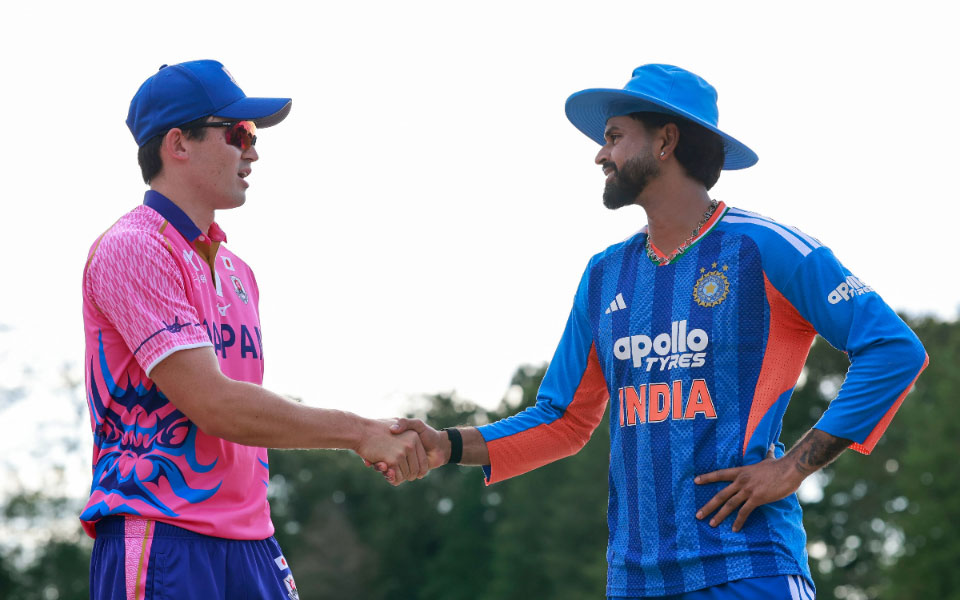
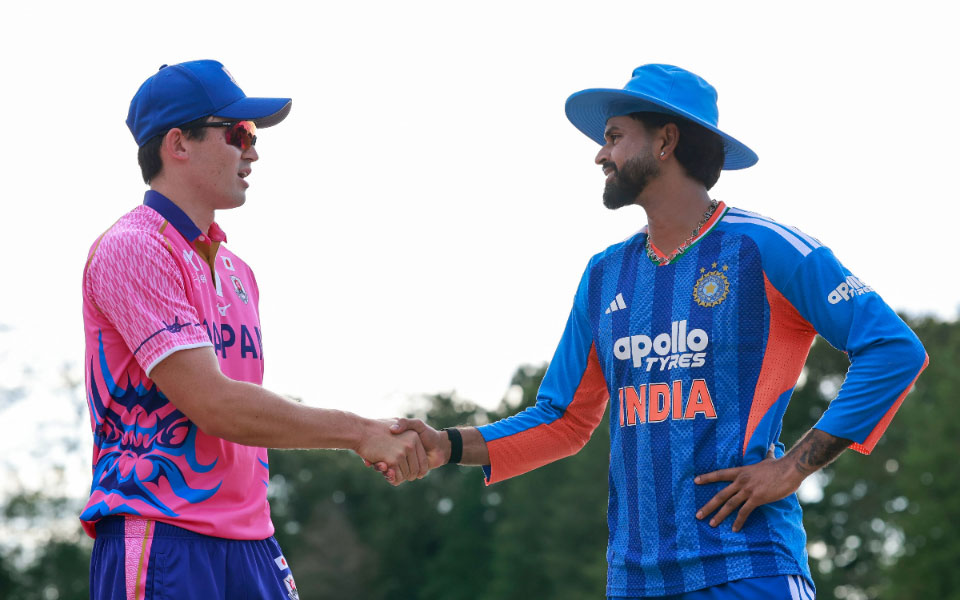
India and Japan players exchanged jerseys at the conclusion of their first-ever men’s international cricket match, a one-off T20I held on September 22, 2026, at Sano International Cricket Ground in Tochigi Prefecture, Japan.
The occasion was historic for both nations, as the two sides had never previously met in men’s international cricket. Shreyas Iyer led the Indian team for the fixture, which carried significance well beyond the result on the field.
The match was conceived as the launch event for the ‘Sport 75’ bilateral initiative, a programme tied to the 75th anniversary of diplomatic relations between India and Japan. The jersey exchange at the close of play reflected the goodwill spirit in which the fixture was designed and agreed upon by both boards and governments.
Respect. Camaraderie. Cricket. 🤝
A special jersey exchange between #TeamIndia and Japan to cap off a historic day 🇮🇳🇯🇵#TeamIndiaInJapan | #JPNvIND | @CricketJapan pic.twitter.com/xWjIxCOhfw
— BCCI (@BCCI) September 22, 2026
Why was this match organised in Japan?
The one-off T20I was arranged specifically to mark 75 years of diplomatic ties between India and Japan, with the ‘Sport 75’ initiative formally launched around the fixture. Staging the match at Sano International Cricket Ground in Tochigi Prefecture placed the event on Japanese soil and underlined the intent to promote cricket’s growth within the host country.
The timing of the fixture was deliberate. The game was scheduled two days before the start of the men’s cricket competition at the Aichi-Nagoya Asian Games, giving the Indian squad a competitive outing on Japanese soil immediately ahead of the multi-sport event. That scheduling allowed the match to serve a dual purpose: a diplomatic milestone and a practical preparation exercise for the Indian side.
Hosting a team of India’s standing was itself a significant moment for Japanese cricket, providing the sport with a high-profile platform in a country where it remains a developing discipline.
What made the jersey exchange a fitting conclusion to this fixture?
The tradition of swapping jerseys is most closely associated with football, but it has been adopted in cricket on occasions that carry particular historical or goodwill significance. Given that September 22, 2026 marked the first time India and Japan had ever faced each other in men’s international cricket, the gesture was a natural expression of the occasion’s importance.
The exchange brought together the diplomatic backdrop of the ‘Sport 75’ framework, the milestone of a maiden bilateral meeting and the broader context of the Aichi-Nagoya Asian Games, all of which gave the fixture a weight that extended beyond a standard warm-up match.
The combination of the historic first meeting, the anniversary of India-Japan diplomatic relations and the proximity to the Asian Games made the jersey swap a moment that held meaning for both cricket boards and the two governments involved.
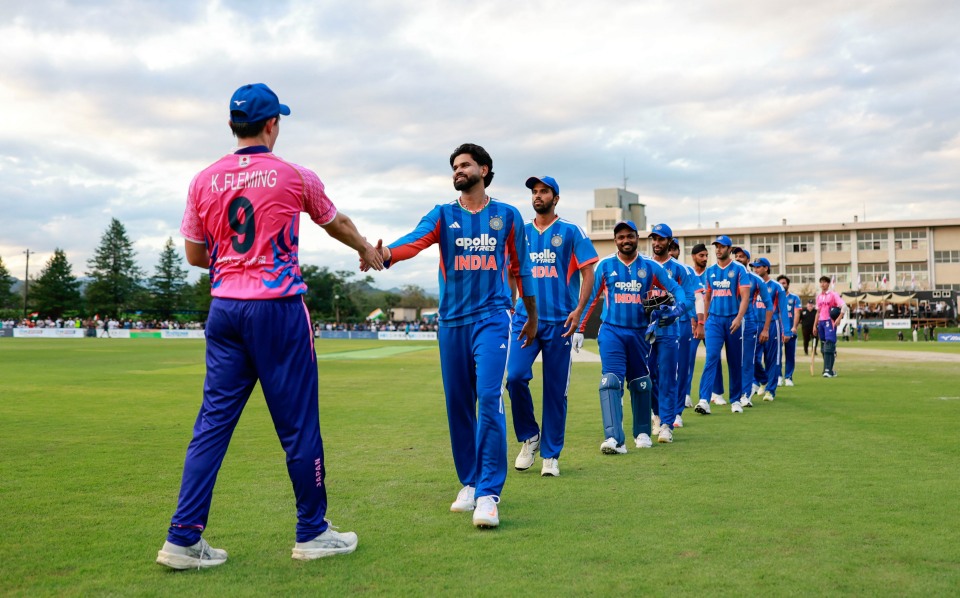 India reclaim top spot in ICC men’s T20I rankings after nail-biting win over Japan
 Gus Miller extends Northamptonshire deal through 2027
 Adil Rashid ruled out of England vs Sri Lanka ODIs with hand injury
 David Miller commits to South Africa despite losing CSA contract