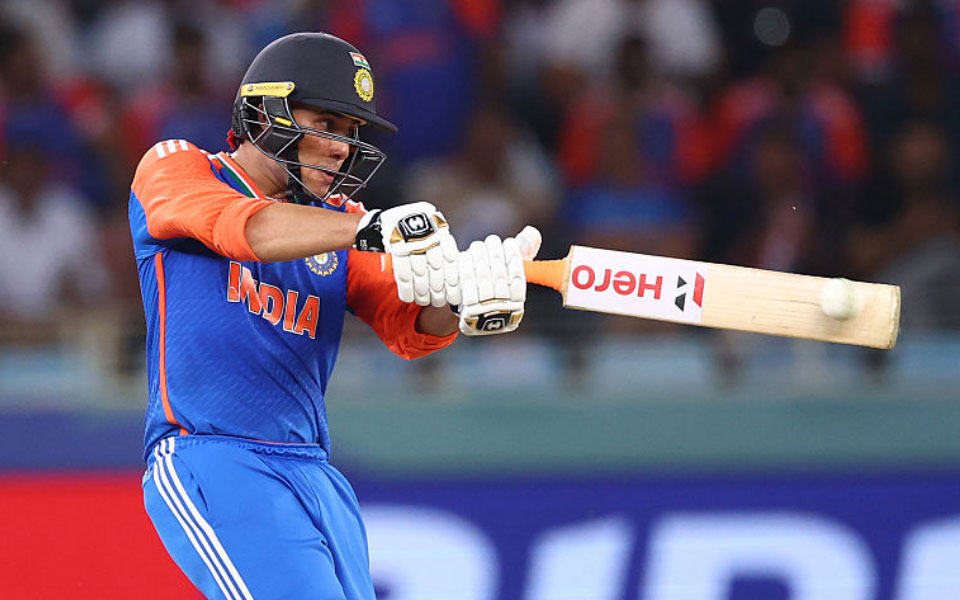
Former India captain Ajinkya Rahane has backed Abhishek Sharma’s ultra-aggressive approach at the top, suggesting that occasional failures are a necessary trade-off if India are to avoid over-reliance on one batter heading into the T20 World Cup 2026. However, the Mumbai cricketer also feels that Abhishek should bat with a high-risk approach but also pick his shots cautiously.
Rahane’s comments came after India’s 50-run defeat to New Zealand in the Vizag T20I, a game that exposed the batting unit on a rare off day despite the hosts having already sealed the series. Abhishek’s golden duck while chasing a daunting 216 brought immediate scrutiny, particularly on how the lineup functions when the opener’s explosive style doesn’t pay off.
The former India captain underlined that such outcomes are part and parcel of fearless T20 cricket, especially from players tasked with setting the tempo inside the powerplay. However, Rahane has also expressed a sort of fear that if such golden ducks come during crucial games in the T20 World Cup, it could hurt the Men in Blue quite badly.
“With Abhishek Sharma, this is going to happen. He plays a high-risk game. When it comes off, he’ll be a match-winner we all know that. But there will be times when he gets out for zero, even first ball. That can happen in a World Cup. I thought the Indian batting today wasn’t dependent on Abhishek Sharma alone. Collectively, they were very good. They played with seven batters, and you could clearly see the difference that having seven instead of eight makes in a side,” Rahane expressed via Cricbuzz.
The left-hander perished on the very first ball of the chase during the fourth match, attempting to muscle Matt Henry into the stands, only to edge the ball to Devon Conway at deep point. His early dismissal triggered a wobble at the top, with Suryakumar Yadav and Sanju Samson also falling cheaply as India struggled to keep pace with the asking rate.
Despite the Vizag stumble, Abhishek’s series as a whole has been nothing short of outstanding. He sits as the third-highest run-scorer with 152 runs from four matches, averaging 50.66 at a blistering strike rate of 266.66. His 14-ball half-century in the Raipur T20I, the second-fastest fifty by an Indian, showcased his ability to tilt games decisively inside the powerplay.
India’s team balance in Vizag also played a role in how the innings unfolded. With Ishan Kishan sidelined due to a niggle he sustained during the third encounter, the hosts effectively went in with six specialist batters, opting to strengthen their bowling resources instead, as they called Arshdeep Singh into the Playing XI.
The middle order, however, showed resilience and intent. Rinku Singh, promoted to No. 4, steadied the innings with a 39 off 30 balls, while Shivam Dube launched a brutal counterattack that briefly threatened to change the narrative.
Dube smashed seven sixes and three boundaries in a 23-ball 65, hauling India from 82 for five to 145 for six and even eclipsing a rare off day for Hardik Pandya. The late surge, though entertaining, was never enough to overhaul the target, as India slipped to a heavy defeat that trimmed their series lead to 3–1.
While the loss in Vizag exposed vulnerabilities, Rahane’s perspective hints at a larger picture, one where India are consciously stress-testing their batting depth. With the T20 World Cup set to begin on February 7, these uncomfortable evenings may prove just as valuable as the dominant wins.
 Who has the most T20I runs for India on English soil?
 PCB grants NOCs to 14 players for Global Super League; Maaz Sadaqat cleared for CPL 2026
 ‘Sanju Samson hasn’t done anything great since the World Cup’ – S Badrinath’s brutal claim on Team India star ahead of 2nd T20I vs England
 ENG vs IND 2026: ‘Will definitely get an opportunity’ – Parthiv Patel on Vaibhav Sooryavanshi’s non-selection