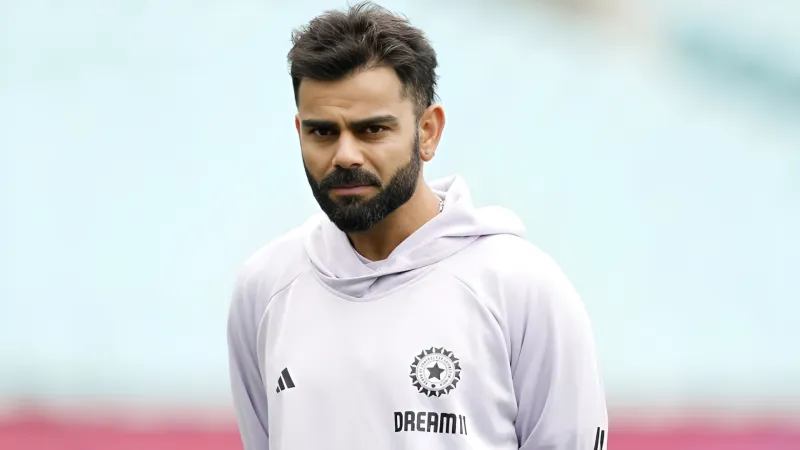
Virat Kohli. (Photo Source: Getty Images)
Even the world’s greatest cricketers have shortcomings in their game, and astute opponents are well aware of them, which comes through constantly reading the one against them. Every spectacular cover drive or impossible yorker hides a minor flaw that might be a game-changer. These weaknesses, often hidden beneath brilliance, distinguish the successful cricketers from those who are genuinely invincible.
Every player, from budding stars to modern-day legends, has a blind spot. Opponents are constantly keeping an eye on a spinner who struggles on flat surfaces or a batter plagued by an early swing. Here’s a look at what the scorecards don’t reveal—the flaws that even the best can’t disguise.
Here are the weaknesses of some most famous cricketers
10. Shaheen Shah Afridi—Effectless on flat wickets; goes flat once the ball stops swinging

Shaheen Shah Afridi, dubbed the Eagle by his fans, is devastating when the ball is swinging, but when it stops moving in the air, he appears average. On slow or flat wickets, his pace alone is unable to unsettle batsmen, as he frequently meanders in line and length. His concern about injuring his knee has prevented him from bowling at full tilt.
Smart teams counter his opening spell and then attack. His lessened efficacy without swing is concerning, particularly in T20s, when flatter decks are prevalent. Until he develops stronger variations or a reverse swing, flat tracks will continue to negate his danger.
9. Ben Stokes—prone to over-aggression with the bat; dodgy knees

Ben Stokes is made for big moments, but his attacking impulses often get the best of him. In an attempt to shift momentum, he occasionally loses his wicket with unnecessary shot selection, especially when being calm is the best for the team’s cause. This has frequently hurt his numbers and England’s chances a few times.
Physically, his shaky knees have drastically reduced his bowling performance. Stokes, a true all-rounder, now has to keep an eye on his bowling workload. He now bowls in shorter spells, and injuries have at times had him play as a specialist batter. His overall effect occasionally suffers when he is not able to bowl.
8. Joe Root—susceptible to off-spin and incoming deliveries

Joe Root is the world’s leading Test run-getter among active players and England’s most consistent batter in red-ball cricket, yet strong off-spin and in-swinging deliveries continue to pose concerns. His instinct to play around his front pad leaves him vulnerable to being trapped in front of the pads against good bowlers, which has been exploited countless times.
When facing quality off-spinners, Root’s defensive style might become predictable. He struggles to rotate strike, particularly in Asian settings. Bowlers target Root’s stumps with spin or reverse swing, knowing that his technical prowess may work against him, getting crucial breakthroughs for their team.
7. Babar Azam—Confused against spin; strike rotation
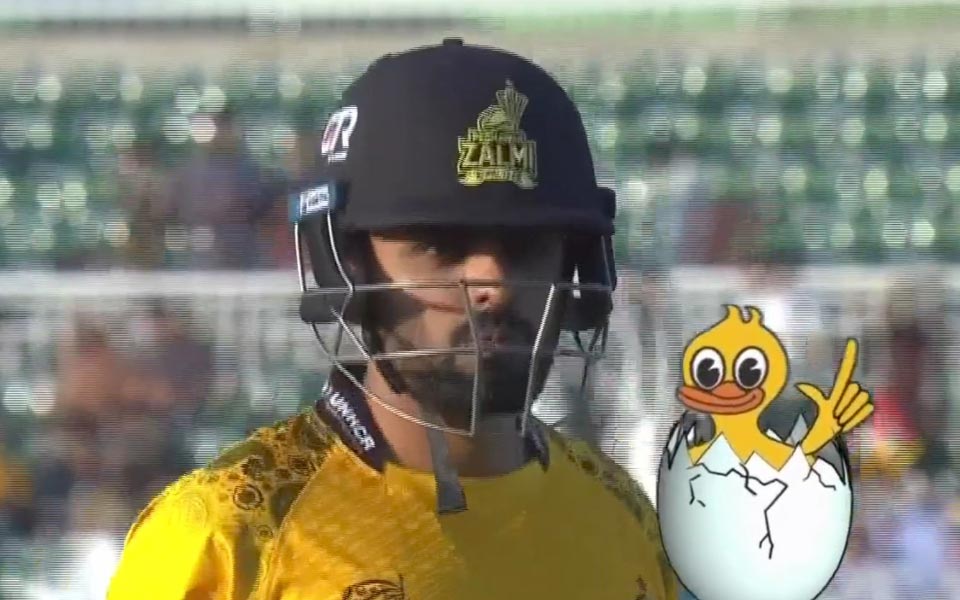
Pakistan’s world-class talent, Babar Azam’s batting, is enjoyable to watch, but his troubles with spin remain unresolved. His footwork is sluggish, and he frequently appears to be trapped in the movement of his feet, particularly on turning tracks. He has suffered fate against good spin even at home in Pakistan.
In limited-overs cricket, Azam’s inability to rotate strike consistently against spin creates pressure on the team. Teams swarm him with close-in fielders and defensive lines, knowing that his scoring rate slows. Until he develops more force and fluency against quality spin, Babar’s batting at a decent strike-rate through the middle overs will be a concern, especially in the shorter formats of the game.
6. Yashasvi Jaiswal— Impulsive stroke play
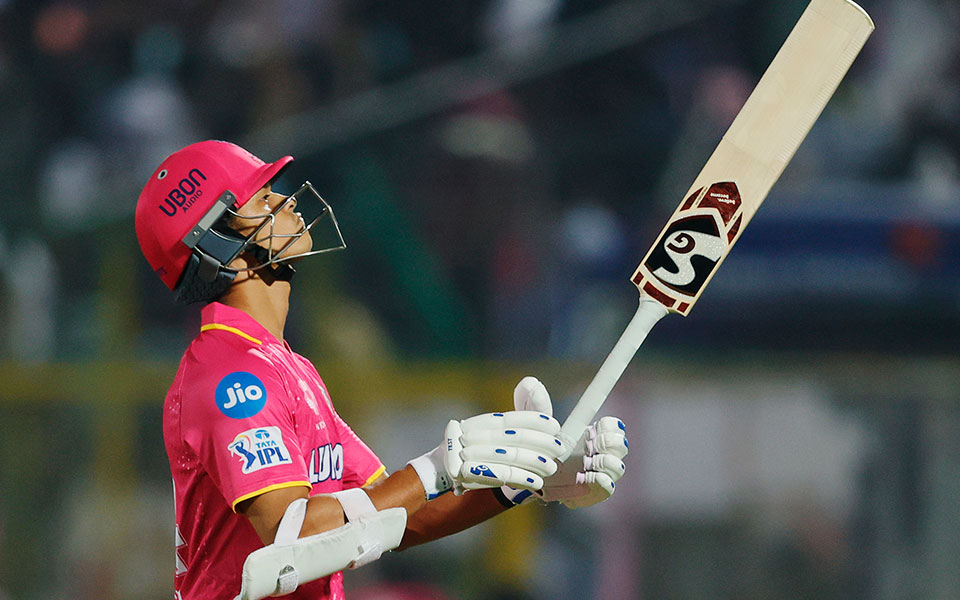
Yashasvi Jaiswal plays with exhilarating energy, yet that fearlessness frequently leads to recklessness. The attacking opening batter has the tendency to take risks early in the innings, especially when the ball is moving, which makes him vulnerable to cheap dismissals.
Opponents have taken note, bowling full and tight or short in the hopes that he will play one too many shots to dominate and perish. His intent is unquestionable, but improving his shot selection under duress will propel him from prodigy to a proper match-winner.
5. Rashid Khan— Getting readable in T20s; struggles on flat wickets

Rashid Khan, once cricket’s ultimate mystery spinner and T20 legend, has begun to become more readable. In T20s, batters have started to negate his danger by playing him out or waiting for predictable short-pitched leg-breaks and depositing them in the stands.
Flat pitches exacerbate the problem for Rashid, as his rapid, skidding deliveries pose little threat because they lack the required amount of flight and bounce to deceive the batters. With so much technology accessible, Rashid must continue to evolve by introducing small modifications or pace variations in order to remain surprising. Otherwise, even average batters will continue to attack his bowling to score boundaries with ease.
4. Jasprit Bumrah — Fragile back and injury prone physique

Jasprit Bumrah is one of the world’s most feared fast bowlers today, but his body hasn’t always kept up. His unconventional action exerts intense pressure on his back and knees, resulting in multiple injuries and breaks from time-to-time. He’s already had one back operation and recently missed three months of action owing to a stress injury to his back.
This frailty frequently leads to workload restriction, particularly in Test cricket, but it also limits his availability in other formats. Teams understand that if they survive his early burst, his impact may wane later. For India, keeping Bumrah fit is as important as his bowling, and as a result, the talks regarding his workload management are never not in the news.
3. Harry Brook—weak technique against quality spin

Harry Brook offers flair and intent to England’s batting, but he struggles against high-quality spin. On turning pitches, his footwork lacks conviction, and he frequently gets caught on the crease. Spinners who turn the ball quickly or change pace irritate him.
In subcontinental circumstances, this problem is amplified. Smart teams target him with quality spin early on, breaking his momentum. Until he improves his technique and stroke selection, Brook will be exposed when the ball begins to grip even a little bit from the surface.
2. Rohit Sharma—Left-arm pacers
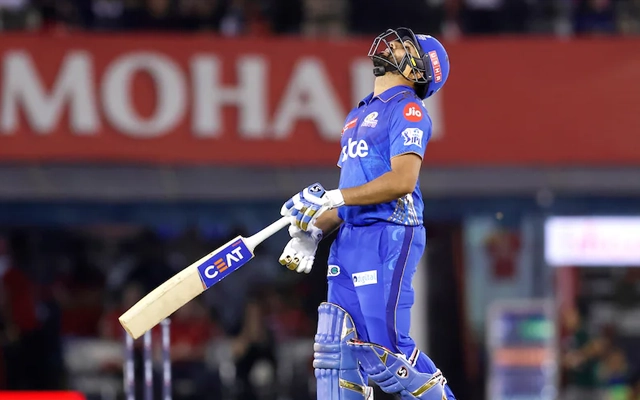
It’s no secret that Rohit Sharma struggles with left-arm pace. The angle across him, combined with modest seam movement, disrupts his initial rhythm. Bowlers such as Boult, Starc, and Amir have regularly dismissed him in crucial matches using this strategy.
The issue is his sluggish footwork and hesitancy outside off. Captains are now opening with left-arm pacers to exploit this vulnerability. Though he’s adjusted throughout the years, it still comes back, especially under pressure or in swinging situations, when the ball is new and the pitch is fresh.
1. Virat Kohli—Balls outside off-stump
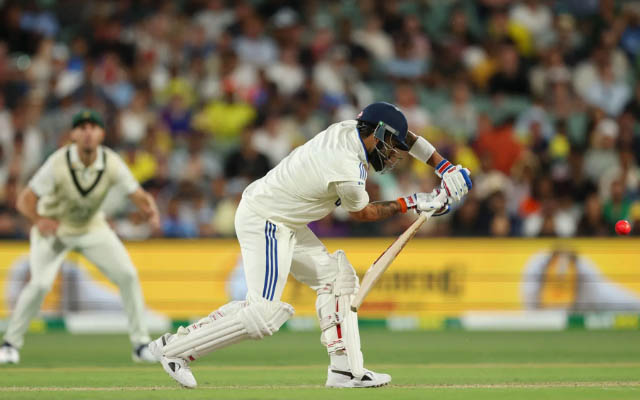
Even Virat Kohli, one of the greatest batters of this era, failed to master his kryptonite: the fourth or fifth stump line, particularly in red-ball cricket. Bowlers frequently lured Kohli early with deliveries in the zone of uncertainty, and his proclivity to drive away from the body cost him dearly, particularly in seaming conditions. It is a weakness that has followed him from the 2014 tour of England, until his retirement from the format he loves the most.
While the New Delhi-born is unconcerned about this in limited-overs cricket, the tendency resurfaces under pressure. His will to dominate occasionally takes precedence over caution, making him an ideal target for early edges. For bowlers, it’s a straightforward strategy—full, wide, and just enough movement—that has proven effective time and again.
 Arjun Tendulkar sets rare all-round record which even his father Sachin missed
 Punjab Kings beat RCB, emerge as most-searched IPL team on Google in 2025
 Ashes 2025-26: Australia vs England Highlights & Review – 2nd Test, Day 2
 Hampshire onboards Russell Domingo as head coach ahead of new season