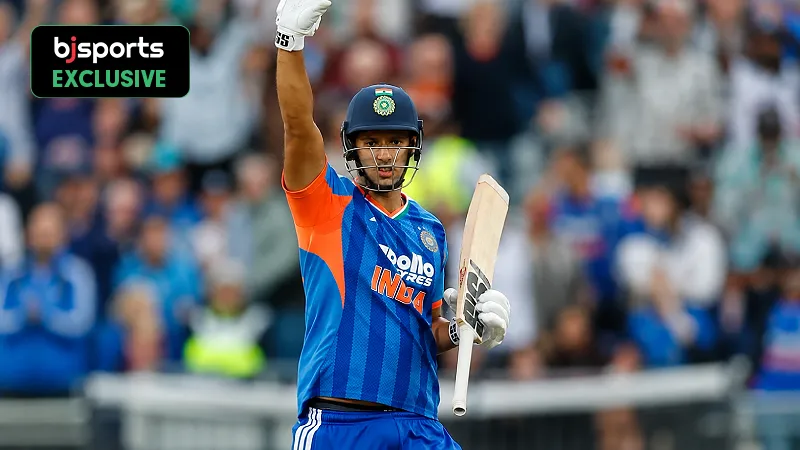
When India needed quick runs with four overs left in Durham, Shivam Dube walked out and hit an unbeaten 42 off 21 balls, adding 44 of the final 44 runs to a 189-run total. It was not improvisation. It was the latest instalment of a pattern that has defined India’s finishing game since the T20 World Cup win in March 2026, one built on numbers rather than reputation, and one that keeps repeating itself against exactly the same opponent England now provide again.
The Numbers Behind His Recent Form
Since the 2026 T20 World Cup campaign began, Dube has averaged 49.83 at a strike rate of 172.83 across his last ten T20I appearances, 299 runs that place him among the most efficient finishers in world cricket. The tournament itself was the centrepiece: 235 runs across eight innings at a strike rate of 169.06, including an unbeaten 26 off 8 balls in the final against New Zealand at a strike rate of 325 that turned a competitive total unreachable.
In January 2026, against New Zealand, he hit the third-fastest fifty by an Indian in T20I history, off just 15 balls.
| Match | Strike Rate |
| Jan 2025 vs England (4th T20I) | 156 |
| Jan 2025 vs England (5th T20I) | 231 |
| Jan 2026 vs New Zealand (2nd T20I) | 200 |
| Jan 2026 vs New Zealand (4th T20I) | 333 |
| Feb 2026 World Cup vs Netherlands | 213 |
| Mar 2026 World Cup Semi-Final | 172 |
| Mar 2026 World Cup Final | 325 |
| Jul 2026 vs England (1st T20I) | 200 |
Dube enters at number six, generally between overs 13 and 20, so these whole-innings strike rates are a proxy for his death-overs output. Ball-by-ball splits for that phase are not available from public data.
Shivam Dube India England T20I Finisher
Against England specifically, Dube’s record is hard to ignore. In the 4th T20I in Pune in January 2025, he scored 53 off 34 balls under pressure and won the Man of the Match, despite being unable to bowl after a concussion. He followed it with 30 off 13 in the next game. When India needed late acceleration in the 2026 World Cup semi-final against the same opponent, Dube delivered 43 off 25 balls.
The first T20I at Durham extended that record: three successive England appearances, three match-shaping contributions. That consistency against one specific opponent is what separates a genuinely proven finisher from a player enjoying a hot streak.
The Matchup Against Three Death Bowlers
England’s death-over attack contains three credible challenges. Jofra Archer, back in the XI for Old Trafford, generated genuine bounce at the top of the innings and tested Dube immediately with a hostile bumper. Sam Curran bowled tightly in Durham, 1 for 25 from his five overs, before dismissing Dube at Old Trafford with a well-placed delivery as India looked to push beyond 200.
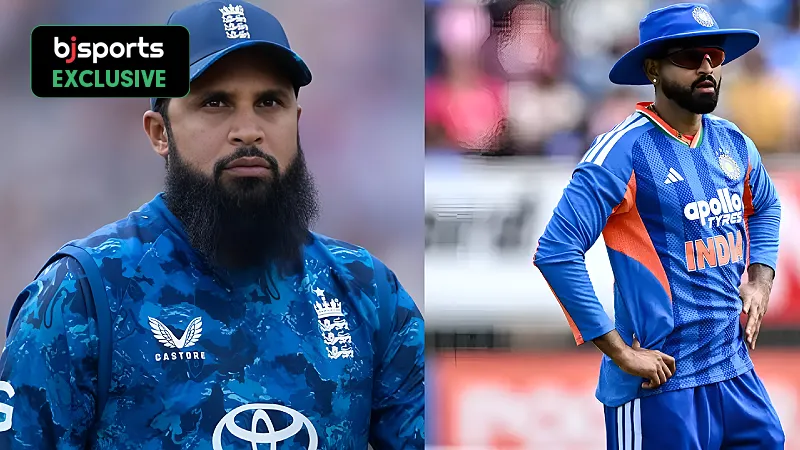
Adil Rashid is the structural matchup worth watching. His recent economy stands at 8.12 across ten T20I matches, with a wicket-taking strike rate of 15.46. Dube, though, is one of Indian cricket’s most effective left-handed hitters against wrist-spin. His ability to attack leg-spin from the first ball makes Rashid’s deployment against him a genuine strategic dilemma, one that could decide India’s scoring ceiling in the remaining fixtures.
The Tactical Case For Batting Him Sixth
The trust in this role goes beyond batting stats. As a left-hander in a predominantly right-handed lineup, he forces late field changes and creates leg-side gaps the rest of the order cannot exploit the same way.
His bowling adds another layer: five wickets in the 2026 World Cup and best T20I figures of 3 for 4, giving Iyer a genuine middle-overs option. An all-rounder who can bowl two overs and bat at the death is tactically indispensable in bilateral cricket.
The Matches Still Left To Play
Three matches remain in the series. If Archer and Curran are England’s primary death options and Rashid controls the middle overs, this skill-set, power against pace, dominance against wrist-spin, a left-handed angle, is a fairly direct counter to every tool England is likely to use.
His form since January 2026 makes the Shivam Dube India England T20I finisher argument close to settled. What the remaining three matches on foreign soil will actually test is how far that elevation holds once conditions and opposition start to vary.
Can Dube keep exploiting the exact matchups England throw at him, or does Rashid eventually find an answer? Share your take below.
FAQs
What is Shivam Dube’s strike rate in the death overs?
Across his last ten T20I innings, he has scored 299 runs at a strike rate of 172.83. In the 1st T20I at Durham, he struck 42 not out off 21 balls in the final overs.
Why does Shivam Dube bat at number six for India?
He bats at six because he combines left-handed death-hitting power with useful medium-fast bowling. As the only left-hander in the lower order, he forces late field changes and creates gaps others cannot.
How many wickets has Shivam Dube taken in T20Is?
He took 5 wickets in the 2026 T20 World Cup, including a Player of the Match display against the Netherlands. His T20I career-best figures of 3 for 4 came against UAE in the 2025 Asia Cup.
Who bowls the death overs for England?
Sam Curran and Jofra Archer are England’s primary death-over bowlers this series. Curran took 3 for 33 in the 1st T20I at Durham and dismissed Dube at Old Trafford, where Archer returned after missing the opener.
What is Shivam Dube’s role in India’s T20I team?
He is India’s designated finisher at number six and a bowling all-rounder. He accelerates in the final six to eight overs, particularly against spin, while offering two overs of medium-fast bowling through the middle phase.
Disclaimer: This Exclusive News is based on the author’s understanding, analysis, and instinct. As you review this information, consider the points mentioned and form your own conclusions.
 Which Batter Truly Leads After 48 T20I Innings, Abhishek Sharma or Phil Salt?
 Why the Numbers, Not the Noise, Make the Case for Vaibhav Suryavanshi’s ENG vs IND T20I Debut?
 Which Batters Can Decide Seattle Orcas vs MI New York in MLC 2026, Match 17?
 ENG vs IND 2026 – Top 3 player battles from 1st T20I