
The city of Faisalabad was electrically charged by the glow of the floodlights, as South Africa seemed destined to dominate from the very start. The partnership between Quinton de Kock and Lhuan-dre Pretorius was developing at an incredible rate; after 20 overs, they had passed the 140-run mark, and it appeared that the stage was being set for a massive score.
For a fleeting moment, it seemed as if South Africa was going to take control of the match. However, cricket is notorious for bringing down even the strongest teams. Ultimately, South Africa’s total of 263 was not sufficient to secure victory, and Pakistan took advantage of this situation to capture a nail-biting two-wicket win with two balls remaining.
Middle-Order Collapse at the Wrong Time
After the initial success, South Africa’s run of form was soon broken after the top order collapsed. Pretorius and De Kock had set the scene, but as they both fell, it seemed that South Africa’s innings had no direction. The next batsman to go, Tony De Zorzi, was caught at slip off Saim Ayub on 18, and Matthews Breetzke’s failure to increase the run rate did little to improve things for his team.
Both Abrar Ahmed and Naseem Shah took advantage of the wobbles in South Africa’s batting with ease. After trying to play some aggressive cricket, Donovan Ferreira attempted a counter-attacking shot and sent a slow delivery straight to Babar Azam, while the tail-enders were unable to give the innings life. What was a very positive start of 141/2 had become a disastrous collapse to 202/5 and eventually 263 all out; a story of missed chances and momentum unfulfilled.
Pakistan’s Game-Changing Bowling
The Pakistan bowlers were the turning point of the match for both teams. Naseem Shah & Abrar Ahmed got breakthroughs at key points during the Proteas’ innings; Naseem’s 141/2 wickets of de Kock stopped the momentum of the Proteas, Abrar got the better of three batters (Breetzke & Bjorn Fortuin) and killed off any chances of a later comeback by the Proteas.
The Pakistan bowlers were accurate with their deliveries, timed them well and changed their tactics effectively through out the match; even when it seemed that South Africa would look to go into a final assault on the final overs, Salman Agha played a very composed counterattack inning of 62 runs, which meant that Pakistan could stay just close enough to get back into the match.
Failure to Adapt and Pressure Management
In addition to statistics, South Africa had problems with situational awareness and managing pressure. The lapses in fielding and dependence on their top players, such as De Kock and Pretorius, created an opportunity for Pakistan to capitalize on minor openings that existed. Both Saim Ayub’s smart wicket of Tony de Zorzi and the consistent batting partnership between Agha and Rizwan showed Pakistan could identify opportunities and then press home the advantage.
The Proteas’ bowling attack was unable to adjust their length and variety when facing a settled batting lineup (especially in the final overs), as they were required to score 22 from the last five deliveries. In addition, the extras and misfielded deliveries provided 20 runs extra for Pakistan’s total, which exacerbated the pressure on South Africa.
Ultimately, South Africa had potential, but let it down at the worst possible time. A top-heavy collapse for their middle order; timely wickets from Pakistan, and South Africa’s inability to adjust to the situation allowed Pakistan to take control and claim the thriller that was played in Faisalabad.
FAQs
1: Why did South Africa lose to Pakistan in the 1st ODI 2025?
A combination of middle-order collapse, timely breakthroughs by Pakistan bowlers, and failure to handle pressure cost South Africa the match.
2: Who was the standout performer for Pakistan?
Salman Agha, whose 62-run counterattacking innings stabilized Pakistan’s chase.
3: Did the pitch play a role in the outcome?
Yes, the slow Faisalabad wicket favored disciplined bowling and punished poor shot selection in the middle overs.
Disclaimer: This Exclusive News is based on the author’s understanding, analysis, and instinct. As you review this information, consider the points mentioned and form your own conclusions.
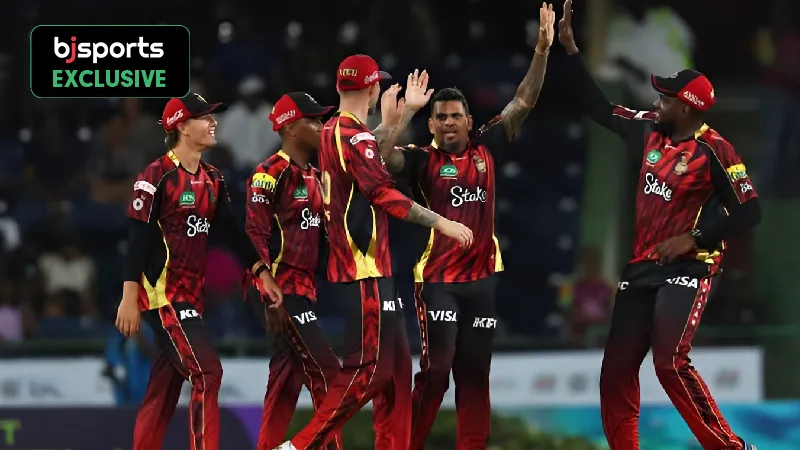 Predicted Playing XI of Trinbago Knight Riders in Match 17 of CPL 2026 against Saint Lucia Kings
 Top 3 Wicket-Takers of TNPL 2026 After League Stage
 Top 3 Run-Scorers of TNPL 2026 After League Stage
 Top 3 Player Battles to Watch Out for in Match 15 of CPL 2026 between Guyana Amazon Warriors and Antigua and Barbuda Falcons