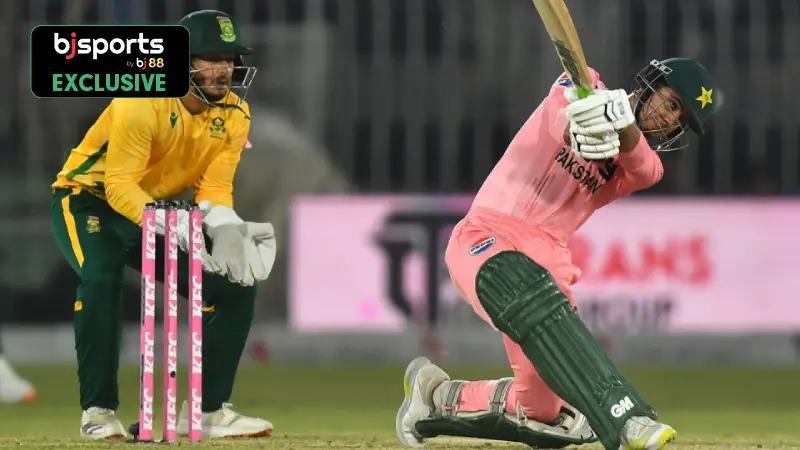
Rawalpindi, under the light, had a buzz of hope for an early season with new young players and returning comebacks. The excitement of a full house was also present, but by the end of 18.1 overs, Pakistan were chasing 195 against South Africa’s 139-5, and the scoreboard looked very bad: Pakistan 139 All Out. A promising “new era” quickly became a “what happened?” autopsy session. It wasn’t just that South Africa won by 55 runs; they outthought them, out hit them, and out bowled them at every stage of the match. Let’s examine the three primary reasons for this collapse.
The Top-Order Implosion That Set the Tone
The T-20 format is one where teams need to establish their intention from an early stage; however, at times, Pakistan’s batting line-up appeared uncertain as to whether they should look to attack or absorb some form of pressure. Sahibzada Farhan and Saim Ayub had shown glimpses of rhythm during their time out in the middle. Saim’s 37 runs off just 28 deliveries, including four sixes, indicated he was looking to rebel. This momentum was lost when Babar Azam returned to the crease, with Babar being dismissed on the second ball of his innings was not just a wicket loss but also psychologically damaging.
The heavy labor of Salman Agha’s 2 off 7 and the loss of an early DRS did little to aid their cause. In 7.2 overs, Pakistan had lost three wickets for 43 runs, which is almost as good as losing your whole team; Pakistan needed to chase down 195, in essence, that was about losing already. The Pakistani innings seemed unable to find a new gear or rhythm.
Corbin Bosch and George Linde: The Twin Wrecking Crew
Each T20i has a spell or cameo where things take an unexpected turn for South Africa in this match; there were two. Firstly, on the batting side, George Linde’s 36 from just 22 balls turned 165 into 195. He came in when the score was 139 for five; he struck boundary shots with intent to push the total from being a good one to a difficult one. By the time he finished his over, the pressure was already mounting on Pakistan, with them yet to face a ball.
Bosch then produced The Bosch Bomb. Bosch had one of the greatest suffocating performances of modern T20 cricket (Corbin Bosch 4 wickets/14 runs/17 dot balls). Let it take hold, nearly three overs’ worth of dots to be produced in a format that is all about scoring. He broke down Pakistan’s batting core at pace, discipline, and using deceptive angles.
Tactical Timidity and Poor Game Awareness
Pakistan’s loss is as much about the timing as it is about their skill set. Pakistan was a couple of overs late with their decision-making on all levels during South Africa’s innings when they allowed South African batsmen to create unrestricted partnerships during the middle overs. The way Hendricks (60) and De Zorzi (33) batted during the middle overs at an overall strike rate of 150+ and 200+, respectively, demonstrated that field placement decisions did not seem to be proactive rather reactive.
The pursuit then ensued – this was like viewing a GPS that is without a destination. There was no established plan for which of the two batsmen would be an anchor and which one would accelerate. Even Mohammad Nawaz’s 36 (off just 20 balls) in the end was a solo performance in a play that had already been concluded. Pakistan’s middle-order did not have situational awareness – they attempted cross-batted slogs at times when the game required them to rotate the strike; conversely, they were too conservative at times when the run-rate was growing exponentially.
FAQs
1. What was the main reason Pakistan lost the 1st T20I?
A top-order collapse and lack of batting intent set the tone for Pakistan’s defeat.
2. Who were South Africa’s standout performers?
Corbin Bosch’s 4/14 and George Linde’s all-round brilliance (36 & 3/31) sealed the match.
3. What must Pakistan improve before the next T20I?
They need better batting sequencing, clearer roles, and smarter fielding plans in key overs.
Disclaimer: This Exclusive News is based on the author’s understanding, analysis, and instinct. As you review this information, consider the points mentioned and form your own conclusions.
 Which Side’s Bowlers Hold the Edge in Easterns vs KZN Inland at Match 47 of CSA T20 Challenge 2026?
 Who Are the Batters Set to Take Charge in Dolphins vs SWD at Match 49 of CSA T20 Challenge 2026?
 Who Are the Bowlers Most Likely to Swing Dolphins vs SWD at Match 49 of CSA T20 Challenge 2026?
 Which Top Order Is Better Placed to Hold Firm in SL vs ENG 3rd Match of the ODI Tri Series 2026?