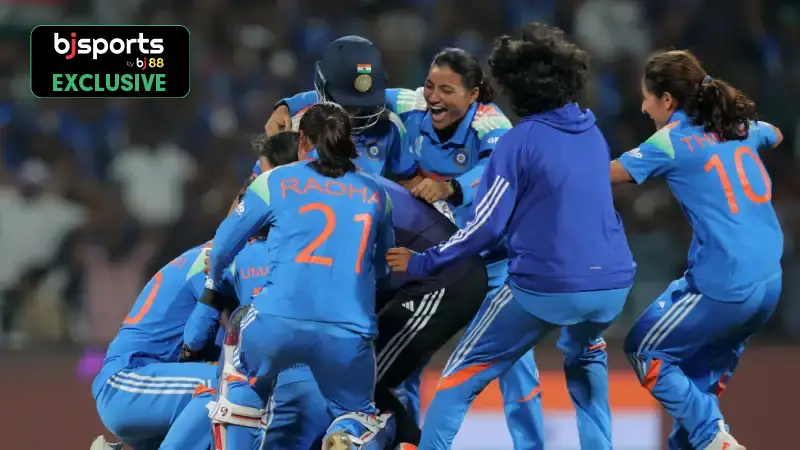
The Australian team made a bold declaration of power when they scored an impressive 338 runs in a World Cup Semi-Final. The innings was powered by a wonderful display of batting from Phoebe Litchfield, who scored 119 off 93 balls, and Ellyse Perry, whose batting was calm and collected as she posted 77 runs, leaving the Indian bowlers stunned. It would be logical to assume that this large total would have been sufficient to book a spot in the World Cup Final for Australia. However, cricket is a sport with a wicked sense of humor when it comes to logic, and Jemimah Rodrigues’ bat was the vehicle through which this happened. Let us look at the specifics of how the match and ultimately the tournament slipped away from them.
A Glorious Start, a Sloppy Finish
The Australian batting was nearly a textbook performance. until it wasn’t. By the time Australia had reached 180/2 off the 27th over, they were well on their way to reaching 370. Litchfield’s free-flowing style and Perry’s control had India looking for a solution, but the collapse that followed was a slow, hesitant demise. The final 63 runs from 180/2 to 243/5 saw the game lose all sense of momentum when Mooney chipped a simple catch and Sutherland was dismissed softly with no resistance, and Perry’s being out at 39.2 overs marked the end of the impulsive acceleration.
The Australians did not create chaos; instead, they fell into confusion. Gardner’s magnificent 63 in just 45 balls brought back some momentum for the Australian team; however, with no help from the tail end, the Australian team struggled and limped to 338 when over 360 could have been achieved. With such an abundance of batting talent in the Indian team, losing 22 runs as a result of Australia’s lower-order batting is equivalent to leaving the door open.
Jemimah Rodrigues — The Calm in India’s Storm
Each Knockout game is based on a leading character, and for Jemimah Rodrigues, she created her own script with a poet’s creativity and a warrior’s tenacity. Entering the field at 59-2 after the two opening batsmen were dismissed by Kim Garth, Jemimah, along with Harmanpreet Kaur, built back up a historic 167-run partnership, which defined calmness. She was untroubled when Australia attempted to bowl short of length, unalarmed by the tight field placement, and undisturbed when Harmanpreet fell to a spectacular catch by Gardner.
She may have been relatively low on power with her 94.77 strike rate, but she had great precision to her batting using the rotating strike method and punishing loose balls to make even Gardner and King appear run-of-the-mill. The knock she hit wasn’t simply a result of good cricketing ability; it was a defiant statement.
Tactical Stubbornness and Fielding Fumbles
One thing that Australians are most proud of is their ability to execute well. However, on Saturday night, they were blind to what was the best way to tactically attack India’s relentless building of momentum. The Indian team continued to develop momentum with a solid build-up; however, the Australian team chose not to be aggressive in their bowling by continuing to use short-of-a-length balls and conservative field placements as the dew made the ball act like soap. Alana King and Ashleigh Gardner both lacked variety in their bowling, and Ashleigh Gardner and Megan Schutt did nothing to solve the problem with their batting.
The fielding area in Fielding, normally the Australians’ strongest point of play, had an unusual lack of flair. The Indians lost a run-out opportunity when they dismissed Rodrigues for 70, and they also dropped a catch when the bowler was Gardner. India’s pursuit, as it gained momentum, made Healy’s on-field demeanor go from angry to irritated — typical of a captain who has no new plans. For most of its history, Australia has been the team that sets the pace of the game, but tonight, they were merely reacting to India’s beat.
FAQs
1: What went wrong for the Australian Women’s in the semi-final?
They lost momentum after a strong start and couldn’t defend a big total due to poor bowling variations and sloppy fielding.
2: Who was the standout performer for India?
Jemimah Rodrigues’ unbeaten 127 anchored India’s chase and earned her the Player of the Match award.
3: Was 338 a defendable score?
On paper, yes — but under lights with dew and flat batting conditions, it required smarter bowling and sharper tactics than Australia showed.
Disclaimer: This Exclusive News is based on the author’s understanding, analysis, and instinct. As you review this information, consider the points mentioned and form your own conclusions.
 Predicted Playing XI of Sri Lanka in 2nd T20I against England
 Predicted Playing XI of England in 2nd T20I against Sri Lanka
 Top 3 player battles to watch out for in Match 35 of CPL 2026 between Barbados Tridents and Guyana Amazon Warriors
 Top 3 bowlers to watch out for in Match 35 of CPL 2026 between Barbados Tridents and Guyana Amazon Warriors