Varun Chakravarthy has 13 wickets in 8 innings this tournament, including a 3/7 that dismantled a top order in under four overs. Rachin Ravindra has 11 wickets in 6 innings, with a 4/27 that turned a match New Zealand looked like losing. Jasprit Bumrah has 10 wickets in 7 innings, with a 3/15 in a knockout match. Three bowlers, three different phases of the game, one final. The batting will get the headlines; these three will decide the result.
Why Chakravarthy Is India’s Most Dangerous Weapon

Thirteen wickets at a best of 3/7 tells you Chakravarthy isn’t just taking wickets, he’s taking them in clusters. Mystery spin works through deception, and deception is most effective in the middle overs when batters are trying to shift gears. New Zealand’s middle order has been aggressive throughout this tournament, and aggressive batters facing unfamiliar trajectories in overs 8 to 14 tend to take risks that produce wickets.
The specific threat he poses to New Zealand’s right-hand dominant middle order is real. His leg-break and googly combination from around the wicket creates an angle that forces batters to play against the natural arc of the shot. When the deception works, the wickets come in twos and threes rather than ones.
How Ravindra Became New Zealand’s Bowling Ace
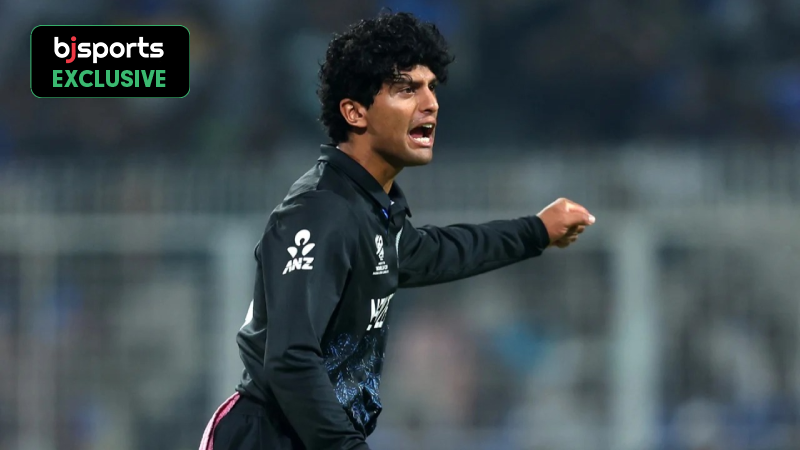
Nobody expected Rachin Ravindra to be New Zealand’s most impactful bowler in this tournament. He came in as a batting all-rounder. Eleven wickets later, that description needs updating.
His 4/27 was the performance that signalled this wasn’t a one-off. Left-arm finger spin from around the wicket to right-handers creates natural turn away from the bat, forcing the outside edge or the mistimed loft to cover. India’s top order is right-hand dominant, Samson, Suryakumar, and Hardik, which means Ravindra has a geometric advantage against the batting side he’ll face in the final.
Mitchell Santner will likely manage Ravindra carefully, saving him for the specific matchups where his angle is most dangerous rather than bowling him in extended spells.
The T20 World Cup 2026 Final’s Three Bowling Threats

Jasprit Bumrah’s 10 wickets in this T20 World Cup 2026 campaign tell only part of his story. His real value in the final is the 3/15 he produced in a knockout match, the ability to replicate controlled, accurate bowling under maximum pressure when the game is on the line.
In T20 finals, the death overs are where matches are won and lost most visibly. New Zealand will bat deep and capable, Allen, Seifert, Phillips, Mitchell, Neesham, which means wickets in hand during overs 17 to 20 is a genuine possibility. Bumrah’s yorker and slower ball combination in those overs is India’s insurance policy against a late New Zealand surge.
Why Ahmedabad Changes the Bowling Picture
Narendra Modi Stadium’s true bounce is a factor all three bowlers will need to account for. For Bumrah, bounce enhances his hard-length delivery and makes his yorker harder to anticipate; the ball arrives faster than batters expect on a surface this true. For Chakravarthy, fewer turns than a spinning track means his variations need to be sharper to compensate.
Ravindra’s challenge is similar; Ahmedabad won’t give him the grip that Colombo-style surfaces provide. His wickets in the final will come from deception and angle rather than turn, which requires the precise landing of the scrambled seam deliveries he has used so effectively against left-handers throughout this tournament.
Dew in the second innings could also shift the balance toward the batting side, which makes Bumrah’s ability to grip and control the wet ball in the death overs an even more critical factor.
- Who is the most dangerous bowler in the final, Chakravarthy, Ravindra, or Bumrah? Drop your pick in the comments and follow for T20WC 2026 Final live updates.
FAQs
1. When is the IND vs NZ match scheduled?
The match begins at 7:30 PM IST.
2. Where can fans watch the IND vs NZ match live?
The match will be available on official ICC broadcast partners and Spots Live Hub.
3. Which bowler could be the key player in IND vs NZ?
Jasprit Bumrah could be the decisive player due to his exceptional control during the death overs.
Disclaimer: This Exclusive News is based on the author’s understanding, analysis, and instinct. As you review this information, consider the points mentioned and form your own conclusions.
 Predicted Playing XI of Sri Lanka in 2nd T20I against England
 Predicted Playing XI of England in 2nd T20I against Sri Lanka
 Top 3 player battles to watch out for in Match 35 of CPL 2026 between Barbados Tridents and Guyana Amazon Warriors
 Top 3 bowlers to watch out for in Match 35 of CPL 2026 between Barbados Tridents and Guyana Amazon Warriors