Devon Conway has scored 1739 runs in 63 T20 matches at a strike rate of 128.8 with a highest of 99. Mitchell Santner has 251 wickets in 247 T20 matches at an economy rate of 7.14. Those two players define New Zealand’s predicted XI for the South Africa series opener at Bay Oval, Conway providing the top order stability that gives the middle order freedom, Santner providing the middle overs control that makes New Zealand’s bowling competitive on any surface. Around them, a cluster of five all-rounders gives captain Santner the tactical flexibility that Bay Oval’s specific conditions demand.
Why the Conway and Robinson Opening Partnership Sets the Platform

Conway’s 128.8 strike rate across 63 T20 matches represents a batter who scores at above-run-a-ball while absorbing pressure, the specific combination that Bay Oval’s early seam movement requires. The venue offers genuine assistance to seamers in the first four overs before settling into conditions that reward stroke play.
Robinson’s attacking intent in the power play creates the scoring pressure that prevents South Africa’s opening bowlers from settling into restrictive lengths. The right and left combination forces South Africa’s captain to adjust field placements mid-over rather than settling into one shape against a uniform batting angle.
How Five All-Rounders Create Tactical Problems for South Africa
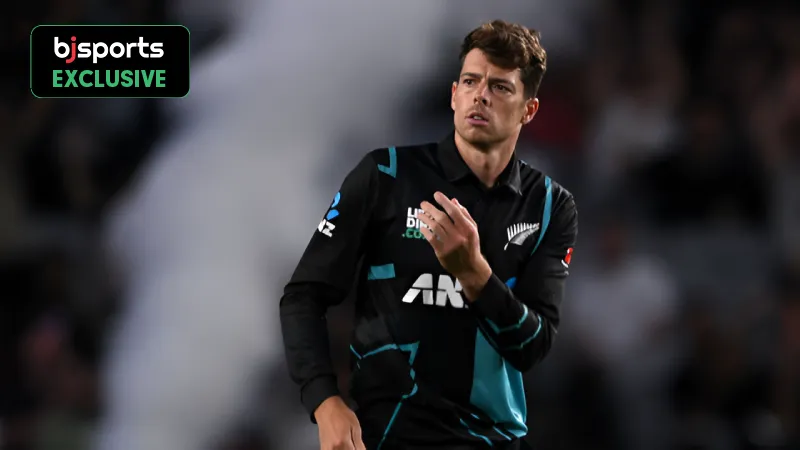
Josh Clarkson, James Neesham, Santner, Zak Foulkes, and Nathan Smith form an all-rounder unit that gives Santner five different bowling options without weakening the batting lineup past seven. That depth means South Africa cannot identify and target a clear tail; every batter from six through nine contributes genuine runs alongside their bowling role.
Neesham and Clarkson add seam options alongside lower-order hitting. Foulkes and Smith expand the pace options. Santner’s left arm orthodox spin provides the middle overs control that his 7.14 economy rate across 247 T20 matches confirms he delivers consistently rather than occasionally. The five all-rounder structure is specifically designed for Bay Oval, a venue where balanced conditions reward teams with multiple bowling options over those relying on two or three specialists.
Why New Zealand vs South Africa Conditions at Bay Oval Demand This Balance

The New Zealand vs South Africa 1st T20I at Bay Oval sets up as a fixture where the team combination matters more than individual brilliance. Average T20I totals at the venue sit between 155 and 164, competitive but not dominant scores that require bowling discipline to defend. The 70-meter boundaries mean boundaries come regularly enough that containment rather than wicket-taking becomes the primary middle-overs bowling objective.
Ish Sodhi’s leg spin provides the variation that flat surfaces at Bay Oval demand when conventional spin is being targeted. Ben Sears’ ability to generate bounce in the early overs aligns with the carry the venue offers in evening conditions. Together with the five all-rounders, New Zealand has nine players capable of making meaningful contributions, an attack that creates matchup options across twenty overs rather than relying on two frontline bowlers to do the majority of the work.
What New Zealand’s XI Reveals About Their Priorities Against South Africa

The selection of Nick Kelly and Bevon Jacobs in the middle order confirms that New Zealand is prioritising batting flexibility over specialist accumulation. Neither is locked into a rigid position. Kelly’s composed approach suits a rebuilding role if early wickets fall; Jacobs can be promoted if conditions favour acceleration from ball one. That adaptability is the specific tactical advantage that batting conditions at Bay Oval deliver as they improve through the innings.
New Zealand’s predicted XI is not the most explosive batting lineup in world T20 cricket. It is a carefully balanced combination designed to survive Bay Oval’s early seam movement, post a total between 155 and 170, and defend it with the bowling depth that five all-rounders and two frontline specialists provide simultaneously.
- Who do you think will be the key player for New Zealand in the 1st T20I against South Africa, Conway with the bat or Santner with the ball? Drop your prediction in the comments and follow for cricket coverage.
FAQs
What time will the NZ vs SA 1st T20I start?
Match timings depend on the official schedule of the South Africa tour of New Zealand 2026.
How does Bay Oval affect team selection?
The pitch offers early seam movement but becomes batting-friendly later, encouraging balanced lineups with both pace and spin options.
Who could be New Zealand’s key player in this match?
Mitchell Santner could be crucial due to his all-round role, controlling the middle overs while contributing with the bat.
Disclaimer: This Exclusive News is based on the author’s understanding, analysis, and instinct. As you review this information, consider the points mentioned and form your own conclusions.
 Top 3 Bowlers to Watch Out for in ETPL 2026 Final between Belfast Wolves and Edinburgh Castle Rockers
 Top 3 Bowlers to Watch Out for in CPL 2026 Final between Jamaica Kingsmen and Antigua and Barbuda Falcons
 Top 3 batters to watch out for in Jamaica Kingsmen and Antigua and Barbuda Falcons
 Top 3 Batters to Watch Out for in ETPL 2026 Final between Edinburgh Castle Rockers and Belfast Wolves