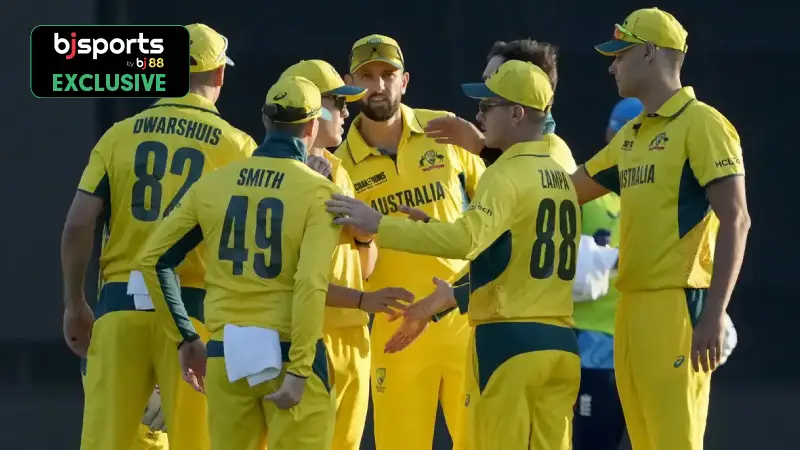
The Australian Twenty20 side’s battle against India has reached an interesting juncture after the high-intensity first T20 match was played at the Melbourne Cricket Ground. The Australians are now being tested by whether they will be able to maximize their home ground advantage, which has historically been a factor for them at the MCG, where there is a slow, low-bouncing drop-in pitch that slightly favors fast bowling. The selection of all-rounder/medium pacer options for the Australian team is not merely based on depth; rather, it will depend upon timing and the ability of these players to adjust to the extremely high-stakes environment that exists between the two teams at the current time.
Marsh and Head: Rewriting the Opening Script
How Australia begins their innings will also be how they begin their match. Together, Marsh’s explosive batting style, combined with Head’s thought-out batting for the situation, gives Australia both massive power and awareness of when to hit and when to hold back. Head historically excels when he faces spin attacks that include left-arm orthodox bowlers in Australia, as he has averaged 54.3 over the past five years against those types of bowlers. In addition to Head being able to produce a high number of runs, Australia must find the right balance between aggressiveness and preserving what little momentum they may be able to gain early on in the match. The early power play of the Indian team has shown the ability to expose the Australian batsmen by exploiting their first few overs of cricket.
Middle Order Roulette: Stability Meets Explosiveness
With Tim David, Josh Inglis, Mitch Owen, and Josh Philippe added to the Australian line-up, Australia has a solid amount of options with respect to finishing runs as well as rotating players. David’s ability to hit big shots out of anywhere on the ground can offset the collapse of their top-order players. Inglis will be a stable wicket-keeper who will be able to take calculated risks when he is batting. The two relatively inexperienced players in Owen and Philippe, provide an element of uncertainty, whether they are able to build strong partnerships for Australia or test their composure under pressure.
All-Rounders and Pace Options: The Balance Factor
With the Australian T20 side potentially revolving around Marcus Stoinis as an all-round player, his capacity to bowl at medium pace, support the batting lineup by anchoring, and provide finishing options in matches are three very unique skills that would make him an extremely valuable asset. With the support of a solid pace bowling unit, including Xavier Bartlett, Nathan Ellis, and Josh Hazlewood, there is potential for a solid, stable team, with the conditions of the MCG’s pitches being conducive to genuine bounce and good line and length. In addition, the slow left-arm spinner, Matthew Kuhnemann, can provide a subtle spin option that will prove to be very effective in the middle overs period of the game.
Australia’s possible eleven to face India is one of calculated risk/reward. The aggressive openers, flexible middle order, and the pace/ spin combination are all reflective of an innovative strategy that emphasizes flexibility over traditional structure. Ultimately, success will be dependent upon Marsh and Head’s ability to capitalize on initial opportunities and Stoinis et al.’s capacity to successfully navigate the middle overs. As such, when Australia sends out its eleven players, they’re not simply doing so as individuals, but rather as components in a larger strategic orchestra, where each player and decision has multiple levels of intent, prudence, and potential.
Key Takeaway:
Australia’s 2nd T20I XI isn’t just about talent, it’s about controlled aggression and tactical foresight at the MCG.
FAQs
1: What makes the MCG pitch unique for T20 cricket?
It’s a drop-in pitch with balanced bounce, favoring genuine pace but still allowing spin to play a strategic role.
2: Why is Stoinis crucial in Australia’s XI?
He provides batting depth, bowling variety, and finishing ability—a true all-round pivot.
3: How can Australia counter India’s middle-over assault?
Through flexible middle-order options, strategic spin deployment, and disciplined field placements.
Disclaimer: This Exclusive News is based on the author’s understanding, analysis, and instinct. As you review this information, consider the points mentioned and form your own conclusions.
 Top 3 Bowlers to Watch Out for in Test Series Between Bangladesh and the West Indies
 Predicted Playing XI of Bangladesh for First Test Against West Indies
 Predicted Playing XI of Sri Lanka in 5th Match of Tri-Series Against Pakistan
 Predicted Playing XI of Pakistan in 5th Match of Tri-Series Against Sri Lanka