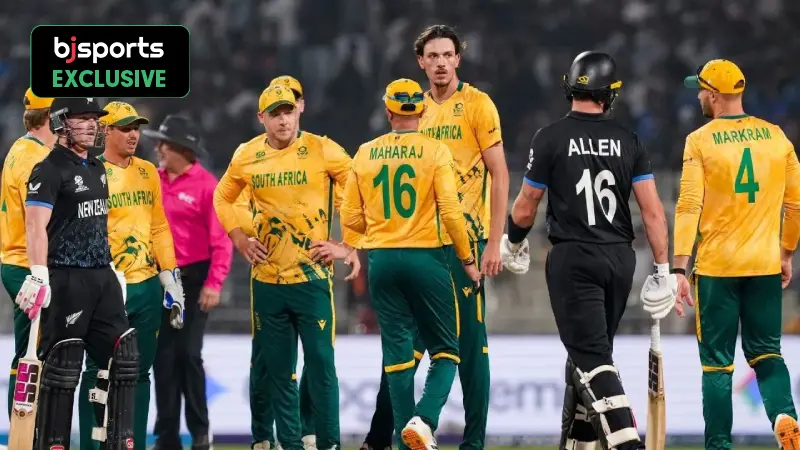
South Africa had won seven consecutive matches heading into the semi-final at Eden Gardens. They arrived with momentum, confidence, and a squad that had outplayed every opponent across the group stage and Super Eights. Then Cole McConchie bowled one over, dismissed Quinton de Kock and Ryan Rickelton in consecutive deliveries, and the match changed completely. What followed was not a collapse driven by poor batting. It was the consequence of a structural fragility that one brilliant over exposed at the worst possible moment. And the most uncomfortable truth about South Africa’s exit is that this story is not new.
The Over That Ended South Africa
De Kock and Rickelton falling in the same over inside the first two overs reduced South Africa to 12 for 2 before the innings had found its footing. Both dismissals came from McConchie’s variations, deliveries that moved late and found edges before either batter had settled into rhythm.
The damage was not just the wickets. It was the psychological reset. South Africa’s batting plan was built around an aggressive opening partnership that would set the tempo before the middle order consolidated. With both openers gone immediately, Aiden Markram walked in needing to repair rather than attack. His 18 off 20 balls at a strike rate of 90 reflects a batter trying to hold an innings together rather than build on a foundation. That is not a failure of intent. It is what happens when the foundation disappears before it is laid.
New Zealand’s Bowling Had No Weaknesses
New Zealand’s bowling across 20 overs was controlled at an economy below 7 runs per over. Matt Henry took 2 for 34. Rachin Ravindra claimed two wickets at an economy of 7.25. Lockie Ferguson maintained discipline through the middle overs. There was no weakness in New Zealand’s bowling plan that South Africa could target for easy runs.
Dewald Brevis scored 34 off 27, and Tristan Stubbs added 29 off 24, both striking in the 120s through the middle phase. Marco Jansen’s unbeaten 55 off 30 rescued the total to 169. But three batters striking between 120 and 125 against bowlers operating under 7 per over produces exactly that kind of total, competitive on paper, insufficient in practice at a venue with a quick outfield and true bounce.
T20WC 2026 Exposed SA’s Biggest Gap
The squad selection decision that most influenced the T20WC 2026 semi-final result was the absence of a genuine wrist spinner in South Africa’s attack. New Zealand’s middle order rotates well against seam, and a wrist spinner who creates uncertainty through flight and turn would have added a dimension South Africa’s bowling simply did not have.
Lungi Ngidi’s slower deliveries partially compensated. Corbin Bosch contributed with pace. But without a bowler who could create doubt through a different kind of variation, South Africa’s attack became predictable enough in the middle overs for New Zealand’s batters to pace the chase with minimal risk.
Why Momentum Became a Burden Here
A seven-match winning streak entering a semi-final creates a specific pressure that teams rarely discuss publicly. The expectation of continued success becomes heavier than the opposition’s bowling attack. Every delivery South Africa faced at Eden Gardens carried the weight of a perfect tournament behind it and the fear of ending it abruptly. South Africa played the group stage like a team with nothing to lose. They played the semi-final like a team terrified of losing everything.
The ability to reset after a two-wicket over in the first two overs, the ability to bowl to a plan when defending 169 against a batter striking at 303, the ability to make tactical changes one over earlier than feels comfortable, these are the skills that separate semi-final losers from finalists. South Africa has the talent. They keep running out of the other things at the worst possible moment.
- Can South Africa finally break their knockout pattern at the next global tournament, or does Semi-Final 1 confirm a structural problem that talent alone cannot fix? Drop your take in the comments and follow for T20WC final updates.
FAQs
Q: Why did South Africa lose the T20 World Cup semi-final?
South Africa lost due to tactical lapses, pressure mismanagement, and critical wickets falling in key overs.
Q: Who was the turning point in the SA vs NZ semi-final?
Cole McConchie’s over, which dismissed Quinton de Kock and Ryan Rickelton, shifted the momentum to New Zealand.
Q: How did New Zealand’s bowling affect South Africa?
Tight lines, disciplined fielding, and low economy rates restricted South Africa’s scoring and forced risky shots.
Disclaimer: This Exclusive News is based on the author’s understanding, analysis, and instinct. As you review this information, consider the points mentioned and form your own conclusions.
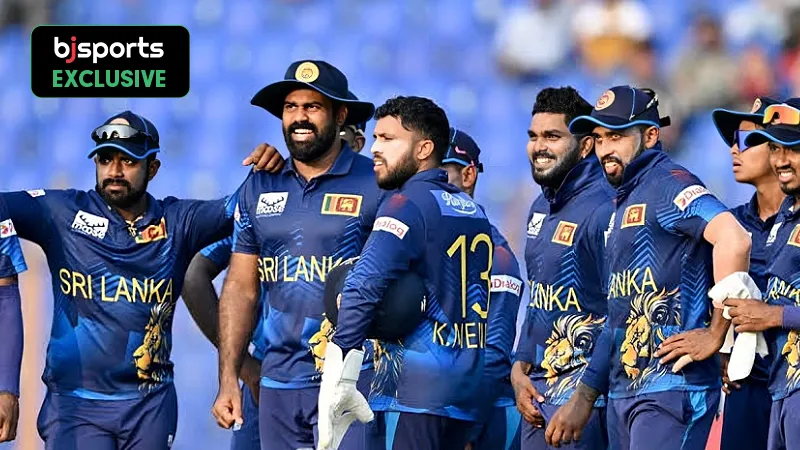 Predicted Playing XI of Sri Lanka in 2nd T20I against England
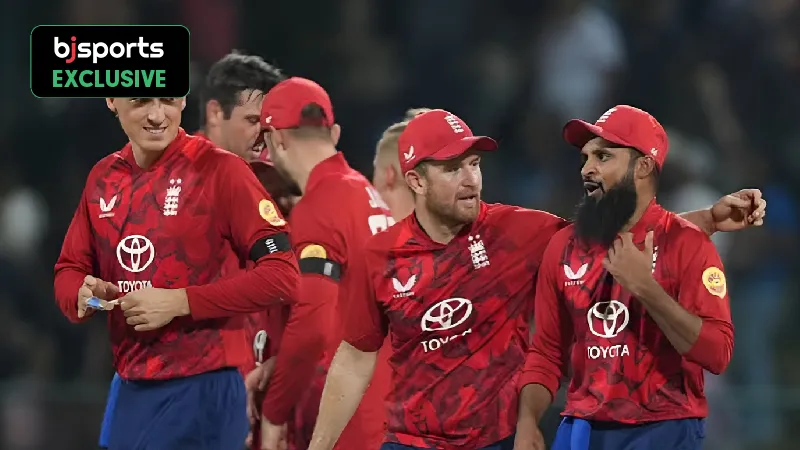 Predicted Playing XI of England in 2nd T20I against Sri Lanka
 Top 3 player battles to watch out for in Match 35 of CPL 2026 between Barbados Tridents and Guyana Amazon Warriors
 Top 3 bowlers to watch out for in Match 35 of CPL 2026 between Barbados Tridents and Guyana Amazon Warriors