June 7, 1975, occupies a special place in cricket history. It marked the opening day of the first men’s Cricket World Cup, a tournament that would eventually grow into one of the sport’s premier global events. Staged in England and played in a 60-overs-per-side format, the competition brought together eight teams and represented cricket’s first serious attempt to establish a world championship in the limited-overs game. While the tournament would go on to produce several memorable moments, its opening day delivered an episode that remains one of the most discussed innings in cricket history.
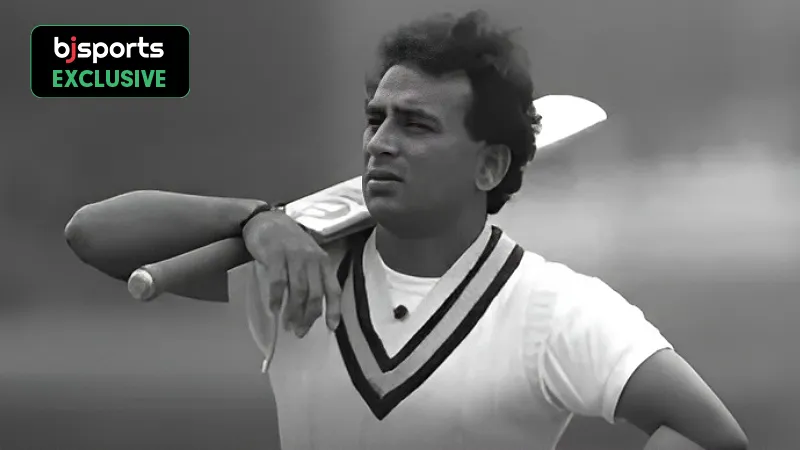
The inaugural match featured England and India at Lord’s. Expectations were high given the novelty of the occasion and the presence of several established stars. What unfolded, however, was a contest remembered not only for England’s dominance but also for an extraordinary innings from Sunil Gavaskar that baffled teammates, opponents and spectators alike. More than five decades later, the match continues to be referenced whenever discussions turn to unusual one-day batting performances.
England set the tone after winning the toss and batting first. Opening batter Dennis Amiss produced a commanding innings of 137, becoming the first player to score a century in World Cup history. Supported by Keith Fletcher and Chris Old, Amiss helped England reach a formidable total of 334 for 4 from their allotted 60 overs. At a time when one-day cricket was still developing, such a score was considered massive. India’s bowlers struggled to contain England’s batsmen, and by the innings break the result already appeared heavily tilted in the home side’s favour.
The challenge facing India was significant but not impossible. Limited-overs cricket was still in its infancy, and teams were learning how to approach large run chases. Aggressive batting throughout an innings had not yet become standard practice. Even so, the scale of what followed surprised everyone in attendance. Rather than attempting a sustained pursuit of the target, India adopted an approach that effectively removed any prospect of victory from the contest.
Gavaskar, already recognised as one of the world’s leading Test batters, opened the innings and remained unbeaten throughout the full 60 overs. He finished on 36 not out from 174 deliveries, striking only a single boundary. India closed on 132 for 3, falling 202 runs short of England’s total. The margin of defeat was then the largest in one-day international cricket and remained a record until the mid-1980s.
The innings generated immediate criticism. Teammates and officials struggled to understand the reasoning behind such a cautious approach. Spectators at Lord’s grew increasingly frustrated as the match drifted towards an inevitable conclusion. One supporter famously walked onto the field and deposited his lunch on the pitch in protest. The incident became almost as famous as the innings itself and has been retold countless times in accounts of the match.
Gavaskar later explained that he felt the target was beyond reach and that preserving his wicket became the practical option. Whether that justification was convincing remains a matter of debate. What is beyond dispute is that the innings stood in stark contrast to the attacking intent expected in limited-overs cricket. As the World Cup evolved and scoring rates increased, the knock came to be viewed as an example of how differently the format was perceived during its formative years.
The match ultimately occupies a unique place in cricket history. It launched the first World Cup, introduced the sport to a global tournament structure and produced the competition’s first century. Yet it is equally remembered for an innings that remains one of the most unusual ever played in international cricket. On the day the World Cup began, cricket witnessed both the future of the limited-overs game and a performance that seemed completely at odds with where the format was headed.
Disclaimer: This Exclusive News is based on the author’s understanding, analysis, and instinct. As you review this information, consider the points mentioned and form your own conclusions.
 OTD 2023: Syazrul Idrus became the first bowler to take seven wickets in a men’s T20I
 Which Winless Team Bounces Back First in San Francisco Unicorns vs Desert Vipers, GSL 2026?
 Who Are the Batters to Watch in Southern Brave vs MI London, 9th Match of The Hundred 2026?
 How Can Mayank Yadav Build on His 149kph Burst in the Zimbabwe T20I Final?