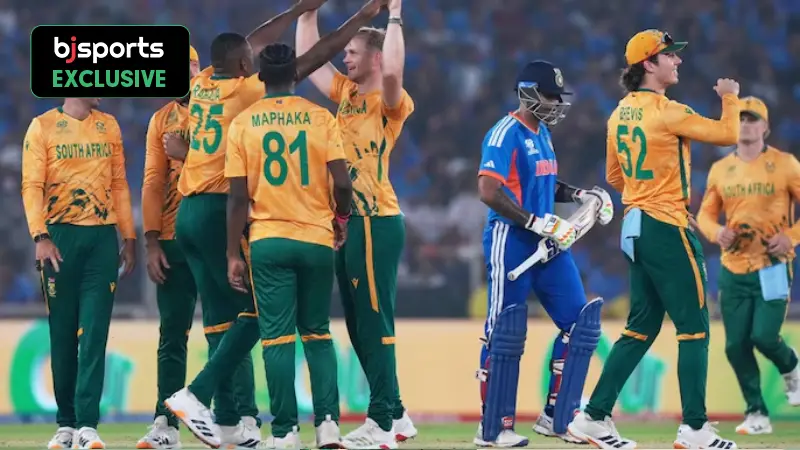
India suffered a crushing 76-run defeat to South Africa after being bowled out for 111 in 18.5 overs while chasing 188 in Ahmedabad. The core answer to Why IND lost to SA is straightforward: a top-order collapse in the chase and an inability to contain South Africa’s middle-overs acceleration. Despite restricting South Africa to 20/3 early and witnessing Jasprit Bumrah’s outstanding 3/15, India allowed the innings to spiral to 187/7 before producing a subpar batting response at a run rate of just 5.89. This IND vs SA match analysis confirms that India lost control during two critical phases.
Top-Order Collapse and Poor Chase Tempo
India’s chase never stabilized. Ishan Kishan departed for 0 at 0.4 overs, Tilak Varma followed for 1 at 1.1, and Abhishek Sharma fell at 26/3 in 4.3 overs. In an 188-run chase, losing three wickets inside five overs drastically shifts the probability.
Suryakumar Yadav attempted consolidation but managed 18 off 22 balls at a strike rate of 81.81, well below the required rate. By 9.1 overs, India were 51/5, effectively out of contention. Even Shivam Dube’s 42 off 37 deliveries, though the highest score in the innings, came at a strike rate of 113.51, insufficient when the asking rate hovered near ten per over.
The absence of powerplay momentum meant India were chasing the game from the outset. Their dot-ball accumulation and inability to rotate strike compounded pressure. This remains one of the clearest IND defeat reasons: failure to align tempo with the target. In knockout-stage T20 contests, scoreboard pressure magnifies early setbacks, and India never recalibrated after the initial blows.
Miller–Stubbs Counterattack Shifted Momentum
South Africa’s 43rd Match of T20WC 2026 innings tells the opposite story: recovery followed by calculated aggression. Reduced to 20/3 inside four overs, they were under significant pressure after Bumrah and Arshdeep Singh struck early. However, Dewald Brevis (45 off 29) rebuilt intelligently before David Miller delivered the decisive acceleration.
Miller’s 63 off 35 balls, featuring seven fours and three sixes at a strike rate of 180.00, came precisely when India needed control. He attacked spin and pace alike, ensuring the run rate climbed above nine. Tristan Stubbs then finished with 44* off 24 at 183.33, maintaining the surge through the death overs.
From 117/4 in 12.2 overs to 152/5 in 15.4 overs, South Africa added 35 high-impact runs during a decisive window. That middle-phase burst altered the match trajectory. These IND vs SA highlights show how India failed to shut down scoring channels after early breakthroughs. Instead of capitalizing at 20/3, they conceded initiative through expensive spells, Varun Chakravarthy (47 in 4 overs), Hardik Pandya (45 in 4), and Shivam Dube (32 in 2). The momentum shift during overs 12–16 ultimately separated the sides.
43rd Match T20WC 2026: Bowling Imbalance and Late Collapse Under Pressure
While Bumrah’s 4-0-15-3 was elite, the lack of collective bowling discipline inflated the target. Outside of him and Arshdeep Singh (2/28), India conceded at double-digit economy rates. In high-stakes T20 cricket, containment is as critical as wickets; India managed one without the other.
The situational pressure of an 188 chase exposed structural fragility. South Africa’s bowlers executed their roles precisely. Marco Jansen delivered 4/22 in 3.5 overs, striking across phases. Corbin Bosch returned 2/12 in three overs, including the crucial wicket of Suryakumar Yadav. Keshav Maharaj’s three wickets between 14.1 and 14.6 overs collapsed India from 86/6 to 88/8, eliminating any mathematical hope.
Also read: Why the ZIM vs WI Match 44 Will Be Decided by Blessing Muzarabani vs Sherfane Rutherford
FAQs
- What was the final result of the IND vs SA 43rd Match?
South Africa defeated India by 76 runs after scoring 187/7 and bowling India out for 111.
- Who was the highest scorer in the match?
David Miller top-scored with 63 runs off 35 balls for South Africa.
- Where was the 43rd Match played?
The match was held in Ahmedabad during the Super Eights stage of the ICC Men’s T20 World Cup 2026.
Disclaimer: This Exclusive News is based on the author’s understanding, analysis, and instinct. As you review this information, consider the points mentioned and form your own conclusions.
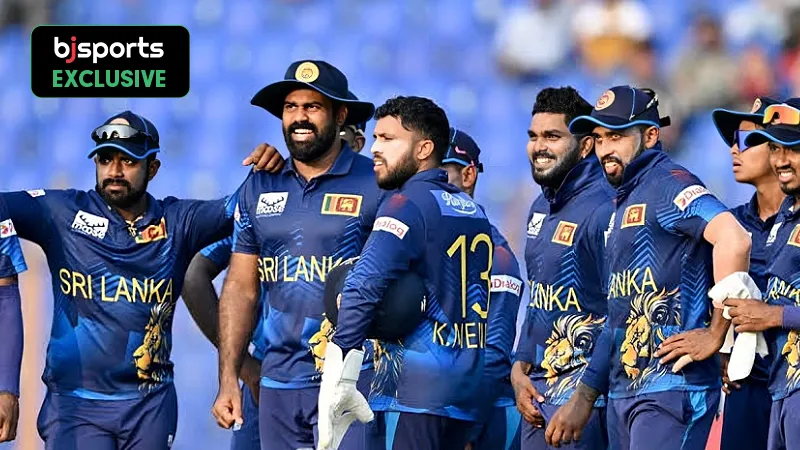 Predicted Playing XI of Sri Lanka in 2nd T20I against England
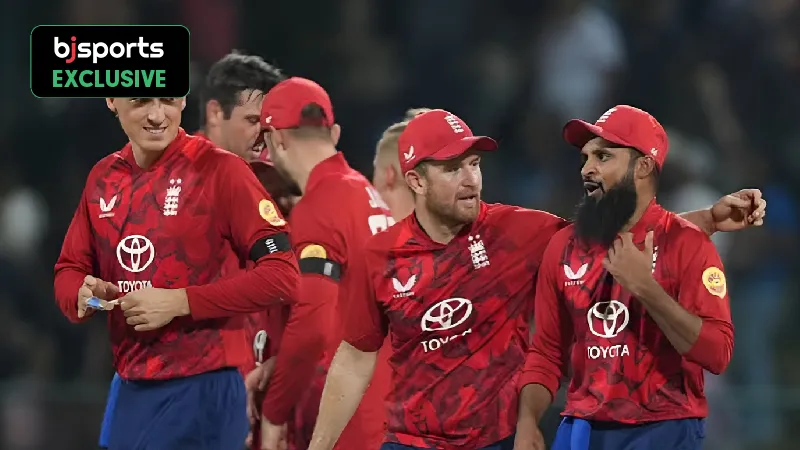 Predicted Playing XI of England in 2nd T20I against Sri Lanka
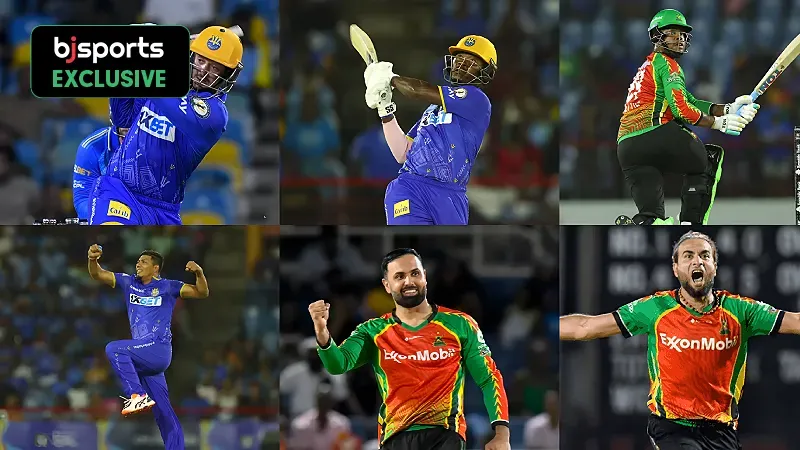 Top 3 player battles to watch out for in Match 35 of CPL 2026 between Barbados Tridents and Guyana Amazon Warriors
 Top 3 bowlers to watch out for in Match 35 of CPL 2026 between Barbados Tridents and Guyana Amazon Warriors