The Big Bash League has many games that can be marketed as a “chaotic” affair (sixes being hit for distance, bowlers running around to catch balls, and captains taking wild guesses), however it’s the games that have the most effect on how a season will go that are usually won through controlling a game rather than getting in amongst the carnage. This is exactly what fans need to consider going into this game between the Sydney Sixers and Adelaide Strikers. Both teams come into the match playing at different tempos; however, both still have the same burning question: Who can set the pace of the game when the noise level reaches its peak?
The Henriques Method of Control
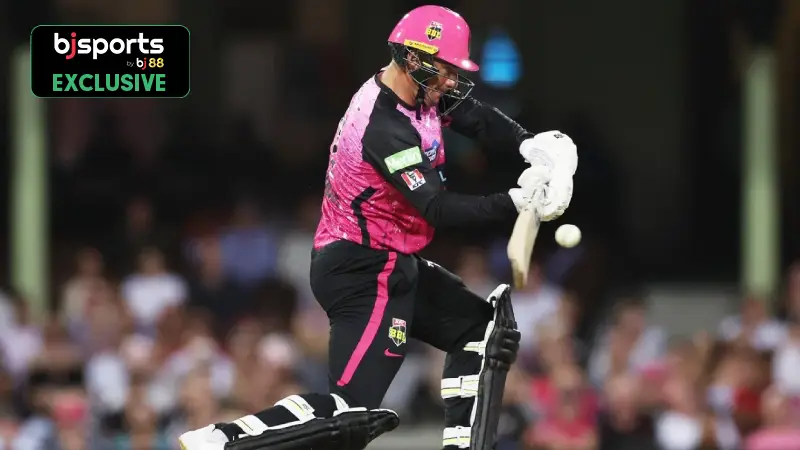
The Sixers’ Moises Henriques does not have a habit of running up massive scores; he has a habit of running up huge moments. With a top score of 77 from 138 innings, you might think that’s a small total until you consider all the times that run came at a time when the Sixers were struggling. His strike rate of 130.40 is well below BBL standards for high-impact players; however, it is very consistent, very reliable, and very damaging to bowlers.
Henriques’ most important contribution as a player is his ability to be “elastic” in terms of innings. In the first few overs, he can help to stem the flow of early pressure, then he can create a platform with some steady scoring through the middle overs, and force bowlers back into defensive plans they’d much rather avoid.
Philippe and the Price of Acceleration
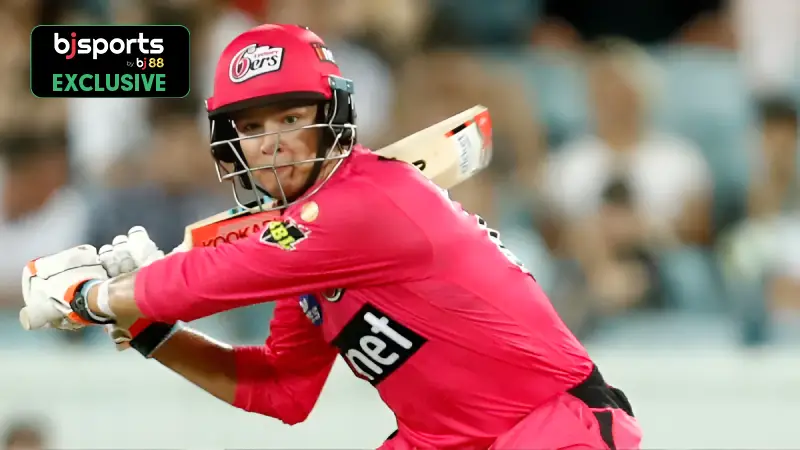
The Sixers’ Josh Philippe has a very different approach than the rest of the team. In 98 innings with 2474 runs at a 137.67 average, he is the embodiment of the “front-loaded” concept hits big early in the match to determine field settings and create chaos for the opposing team. He is also still riding on his 99*, which shows just how fast Philippe can go from creating a competitive score to making it an almost impossible score for the other team to catch up to.
However, there are risks associated with being aggressive, as we all know — you will get out quicker when you try to accelerate your run rate. Against the Strikers, who are fond of hitting the powerplay aggressively, Philippe’s innings becomes either all about him dominating the Strikers or them disrupting his innings. When the Sixers have Josh Philippe survive the first 3 overs (which is a huge ask), the odds tip heavily towards Sydney.
Ross and the Value of Late Overs Chaos

Alex Ross is still not an A-list performer in BBL, but he is too good to ignore in terms of statistics alone. He has batted in 24 innings and made 503 runs at a strike rate of 142.49. His top score was 65. Those are the type of stats that catch your eye, particularly when you consider the time frame (overs 14 to 20) and the way games tend to break apart.
Adelaide’s game plan is increasingly built around Ross as a ‘pressure valve’, someone who can turn 145 into 170 through a few boundary shots. When he faces a strong Sixers death over bowling unit, Ross’ task will be to disrupt their plans, or else Adelaide may fall short by ten runs.
Key Takeaway
In SS vs AS, batting impact will be measured by timing, not just strike rate.
FAQs
What makes Moises Henriques crucial for SS?
His ability to stabilize innings under pressure and manage tempo across phases.
Why is Josh Philippe a high-risk, high-reward option?
His aggressive power-play approach can either dominate bowling attacks or expose early vulnerability.
How can Alex Ross change the match for AS?
By accelerating late overs and disrupting structured death-bowling plans.
Disclaimer: This Exclusive News is based on the author’s understanding, analysis, and instinct. As you review this information, consider the points mentioned and form your own conclusions.
 Top 3 Bowlers to Watch Out for in Test Series Between Bangladesh and the West Indies
 Predicted Playing XI of Bangladesh for First Test Against West Indies
 Predicted Playing XI of Sri Lanka in 5th Match of Tri-Series Against Pakistan
 Predicted Playing XI of Pakistan in 5th Match of Tri-Series Against Sri Lanka