Three innings. Three different eras. Three completely different ways of reaching a number that most teams can’t chase. The 256/4 against Zimbabwe in Chennai 2026, the 218/4 against England in Durban 2007, and the 210/2 against Afghanistan in Abu Dhabi 2021 aren’t just records; they’re a timeline of how India’s batting philosophy has been rebuilt from the ground up. Each one tells a different story about how the approach changed, and why the ceiling keeps rising.
256/4 vs Zimbabwe
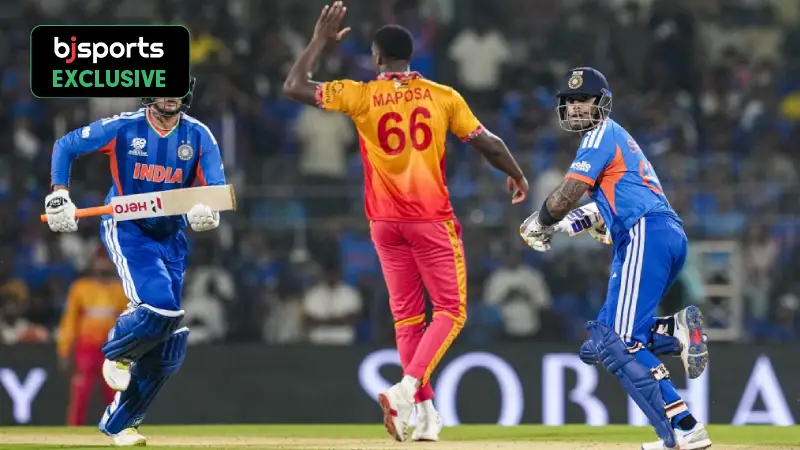
Chennai 2026 produced something different from any previous India innings at a T20 World Cup. The 256/4 against Zimbabwe wasn’t built on a single cameo that dragged the total; it was layered, with explosive starts followed by ruthless finishing that never let the scoring rate plateau.
Seventeen sixes across the innings. Powerplay is used for boundary maximisation rather than cautious accumulation. Middle overs managed through proactive strike rotation that prevented momentum dips. Death overs finished with controlled aggression against pace-on deliveries, punishing predictable yorker attempts and length errors. Chepauk’s conditions aided stroke play, but the sustained high strike rates across multiple batters, not just one, was the defining feature. This is how modern India builds massive totals: collective impact, not superstar dependency.
218/4 vs England

The 218/4 against England in 2007 belongs to a different cricket world, lower overall strike rates, smaller datasets, and a format still finding its identity. But it remains the innings that changed what India believed was possible in T20 cricket.
Yuvraj Singh’s 58 off 16 balls at Kingsmead, six consecutive sixes in a single over, didn’t just win a match. It demonstrated early recognition that death-over maximisation against a specific bowler could reframe the entire trajectory of an innings. The acceleration between overs 17 and 19 showed how targeted aggression could alter match momentum in ways the format hadn’t yet fully absorbed. India wasn’t just competing in that over. They were dictating terms. That philosophical shift from participation to domination echoes through every big total that followed.
210/2 vs Afghanistan
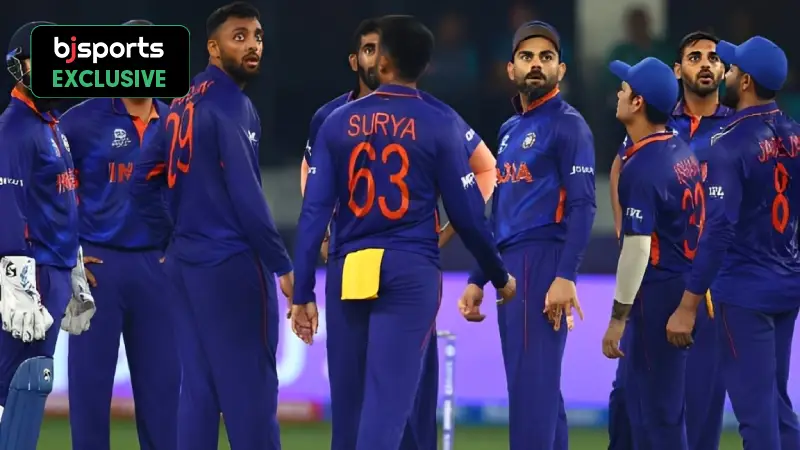
The Abu Dhabi innings in 2021 is the least dramatic of the three and arguably the most instructive. A 140-run opening stand set the platform, ensuring India preserved wickets while maintaining scoring pressure throughout the innings, no panic, no sudden acceleration required.
Zayed Cricket Stadium’s consistent bounce rewarded controlled stroke play. The balance between boundary hitting and strike rotation kept the required rate stable. The finishing burst across overs 16 to 20 lifted the total beyond par without excessive risk. Where Durban was explosive, and Chennai was dominant, Abu Dhabi was precise. It confirmed that India could build massive totals through tactical planning as effectively as through individual brilliance.
How India’s T20 World Cup Batting Has Systematically Evolved
Looking across all three innings, the India T20 World Cup batting evolution follows a clear structural pattern. Powerplay aggression has intensified with each edition, early tournaments prioritising preservation within restrictions; recent campaigns prioritise dominance from the first ball. Six-hitting frequency has increased steadily, particularly at subcontinental venues where shorter boundaries and flat surfaces reward aerial play.
Designated finishers have become a defined role rather than an accidental one. From Yuvraj’s 2007 cameo to Pandya’s controlled death-over assaults in the current era, the finishing template has been refined and systematised. Batting depth now extends comfortably to No.7, enabling sustained aggression without the top order needing to bat through fear of collapse. The shift from consolidation to calculated risk-taking is visible in every phase of how these three totals were constructed.
If this trajectory continues and the structural improvements suggest it will surpass 256 is not a question of possibility. It’s a question of conditions, opposition, and which edition provides the right combination of both.
Which of these three innings is your favourite India T20 World Cup batting performance? Drop your pick in the comments and follow for more T20 World Cup 2026 batting breakdowns.
Disclaimer: This Exclusive News is based on the author’s understanding, analysis, and instinct. As you review this information, consider the points mentioned and form your own conclusions.
 The Hundred Men’s 2026 Match 18: MI London Predicted XI
 The Hundred Men’s 2026 Match 18: Manchester Super Giants Predicted XI
 The Hundred Men’s 2026 Match 17: Sunrisers Leeds Predicted XI
 The Hundred Men’s 2026 Match 17: Trent Rockets Predicted XI