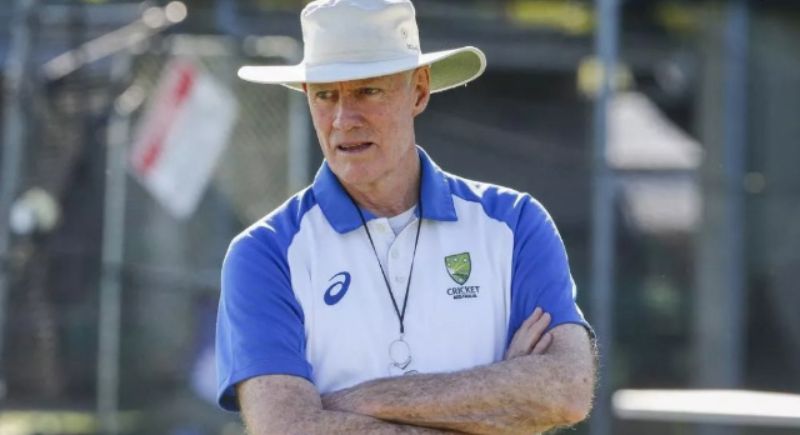
Harbhajan Singh has described Greg Chappell’s period as India coach as one of the darkest chapters in Indian cricket history. Chappell took charge of the Indian team in June 2005 and remained in the role until the conclusion of the 2007 ODI World Cup. During his two-year tenure, the Australian coach’s management approach created significant friction within the squad, according to Harbhajan’s recent comments.
Harbhajan spoke about Chappell’s impact on the team during an appearance on the Prakhar Gupta Podcast. The off-spinner outlined how Chappell’s methods fundamentally altered the dynamics of a squad that had been closely bonded following India’s run to the 2003 World Cup final, where they lost to Australia.
“The way Chappell behaved with Dada (Ganguly), and whatever he did with the Indian team during those days, it was one of the darkest and worst chapters in the history of Indian cricket. Appointing him as head coach was one of the worst decisions made by the Indian management. He implemented a divide-and-rule policy, where he made the players fight among themselves while acting as the ruler,” Harbhajan said on Prakhar Gupta Podcast as quoted by NDTV Sports.
What was the impact on squad bonding?
Chappell’s tenure began with a public conflict with Sourav Ganguly, who was India’s captain when the Australian arrived. Ganguly was removed from the team after Chappell suggested he sit out a match during a tour of Zimbabwe. The coach later sent an email to the BCCI criticising Ganguly as mentally and physically unfit to lead the side and accusing the captain of exaggerating injuries. The email was leaked, creating chaos and dysfunction within the dressing room.
“He spoiled the entire team. The players who played together in the 2003 ODI World Cup and shared such great bonding were no longer talking to each other. Our team was one of the strongest and most closely-knit teams, and he literally broke it apart,” Harbhajan said.
Did Chappell deliberately weaken India?
A clear divide emerged between Chappell and the team management, including captain Rahul Dravid, and the senior players. Sachin Tendulkar disclosed that Chappell had suggested to him to take over India’s captaincy from Dravid months before the 2007 World Cup, telling him they could control Indian cricket together. Tendulkar later described Chappell as a ringmaster who imposed his ideas on players without concern for their comfort.
“In my opinion, Chappell’s main strategy was something else. In those days, India were the only team that consistently challenged Australia. It’s possible that he tried to divide us so that we couldn’t play as a united team on the field and would eventually lose matches. The same thing happened during the 2007 World Cup,” Harbhajan said.
India’s 2007 World Cup campaign ended in group-stage elimination. The team won only one of three group matches, defeating Bermuda but losing to Bangladesh and Sri Lanka. The poor performance marked the end of Chappell’s tenure as India coach.
 ‘Hope he performs really well’ – Rohit Sharma likens Bhuvneshwar Kumar’s India comeback to Akshaye Khanna’s Bollywood resurgence
 ‘Age not a criteria’ – BCCI President on Virat Kohli, Rohit Sharma’s role in build-up to 2027 World Cup
 ‘If he’s extra special, then what about the other five players?’ – Dinesh Karthik backs Vaibhav Sooryavanshi’s squad role
 Brendon McCullum believes his relationship with Harry Brook has ‘blossomed’ over past 18 months