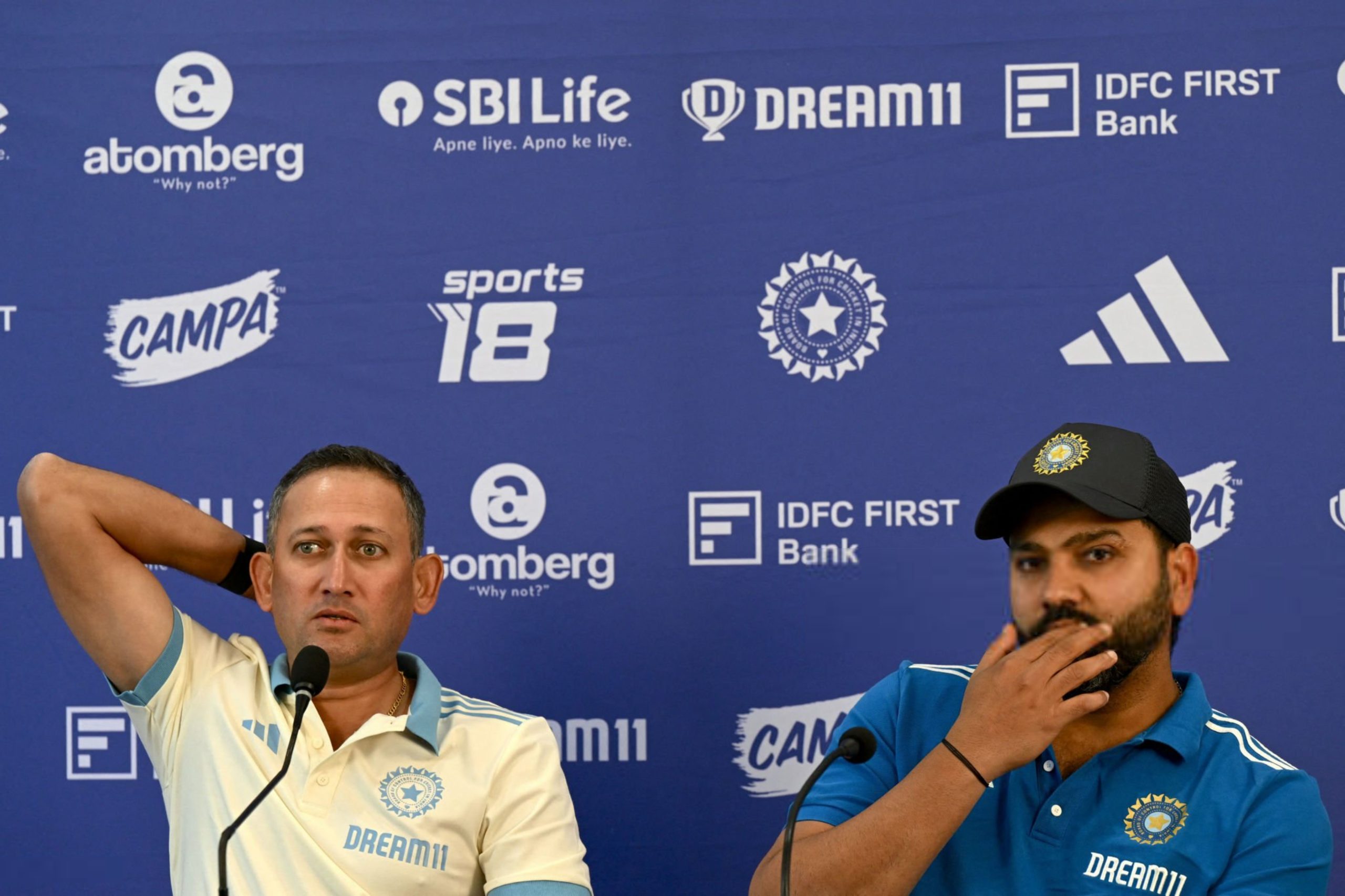
Ajit Agarkar is set to end his tenure as chairman of selectors of the Indian men’s cricket team. A fallout over the ODI future of former India captain Rohit Sharma proved to be a primary catalyst behind Agarkar parting ways with the BCCI ahead of the ODI World Cup 2027.
The trouble began just before India’s white-ball series against England. The selection committee, headed by Agarkar and in agreement with the team management, decided to move on from Rohit in ODIs after the match at Lord’s. South Zone selector Pragyan Ojha, one of Rohit’s closest friends, was asked to communicate the decision to him.
Rohit, who is eager to play in the ODI World Cup 2027, was far from happy with the development. He reached out to a top BCCI administrator to express his disappointment over how he was being treated. The board then urged Agarkar to go slow, pointing out that Rohit was scoring runs consistently. Agarkar, however, believed that if young opener Yashasvi Jaiswal was to play the ODI World Cup 2027, he would need around 20 ODIs to settle in, and that there were no guarantees an ageing Rohit would remain effective on South African pitches.
Why did the BCCI media statement become a turning point for Agarkar?
The situation reached a critical point when the BCCI officially issued a media statement backing Rohit Sharma and dismissing talk of his retirement. The move blindsided Agarkar entirely, as he had no prior knowledge that such a statement was being prepared or released.
“That was perhaps the day when Ajit knew that it would be very difficult for him to continue. In fact, he had no inkling that a media statement was issued by the BCCI. He understood that going forward, the call on big names won’t be his prerogative,” a senior BCCI official was quoted as saying by Hindustan Times.
The statement made it clear to Agarkar that his authority over selection decisions involving senior players had been significantly curtailed. With the ODI World Cup 2027 approaching, that loss of autonomy over key calls appeared to be a decisive factor in his decision to part ways with the board.
What role did differences with VVS Laxman play in Agarkar’s departure?
Alongside the Rohit Sharma episode, significant differences had developed between Agarkar and his former India teammate VVS Laxman, who serves as chairman of the BCCI Centre of Excellence. The disagreements centred on policies regarding injured players and the scheduling of India ‘A’ matches.
“If you think that VVS Laxman’s urge to win at all costs is anything less than, say, a Virat Kohli or a Sourav Ganguly, then you are mistaken. Whatever the competition, Laxman always wanted the best eleven to play,” a former state team coach who had observed Laxman closely at the Centre of Excellence said.
A major clash of opinions arose over team selections for events such as the Asian Games, which Agarkar viewed as a tier-two cricket event and questioned the need to field India’s main squad there. Scheduling conflicts added further tension, with key India ‘A’ matches repeatedly clashing with domestic tournaments like the Irani Cup, and an India ‘A’ series against New Zealand ‘A’ overlapping directly with the senior team’s white-ball fixtures.
The Centre of Excellence also provided no specific recovery timelines for centrally contracted injured players. Mutual mistrust deepened further when a confidential and detailed injury list of top players was leaked to the media, compounding the friction between the two sides.
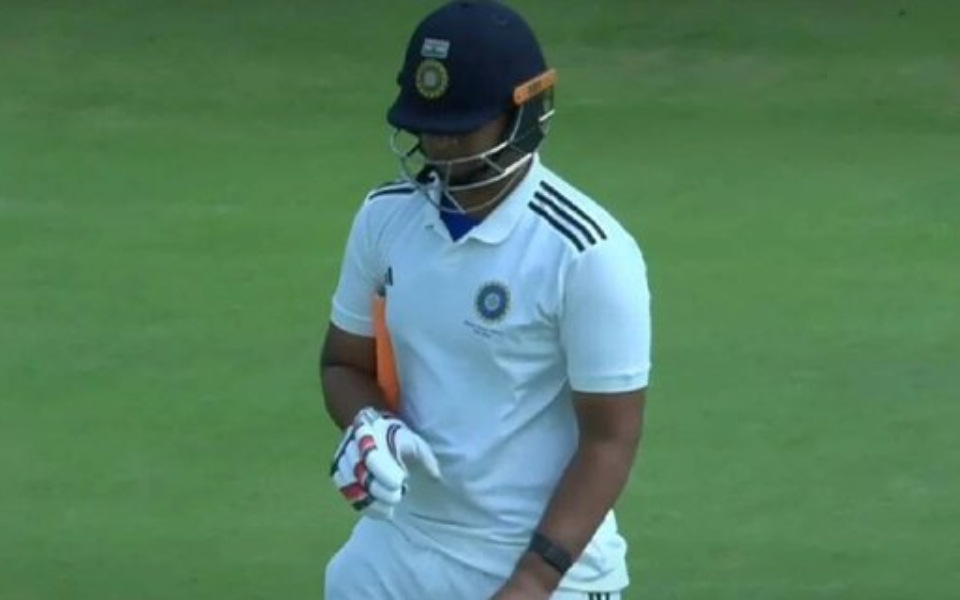 ‘Don’t think he has got the technique’ – Monty Panesar questions Vaibhav Sooryavanshi’s ability to succeed in Test cricket
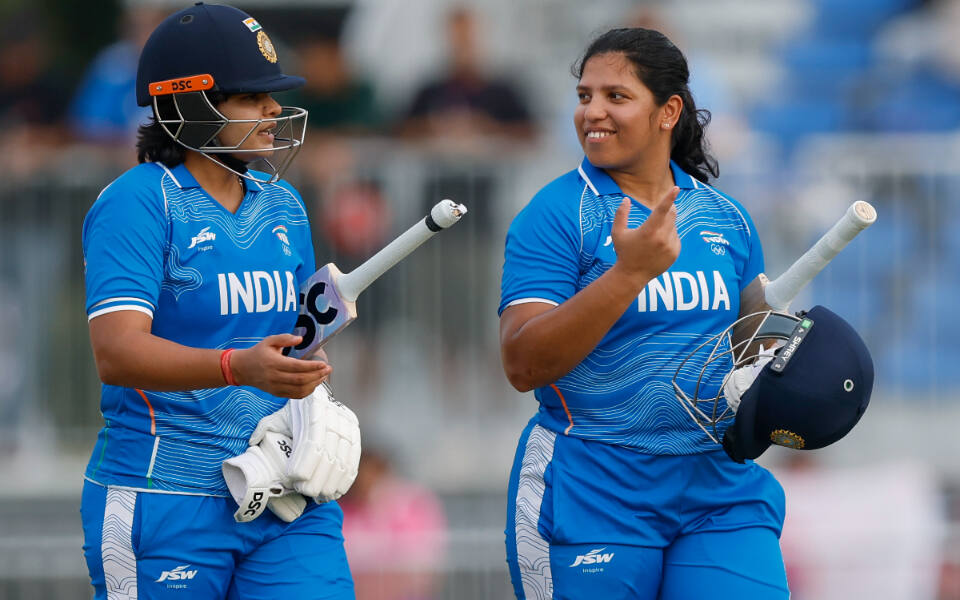 ‘We remains committed’ – JSW Inspire denies kit issues for India cricket teams at Asian Games
 Pakistan out of Asian Games after Sri Lanka cruise through to the final
 Smriti Mandhana becomes leading run-scorer in women’s T20Is during Asian Games 2026 semi-final