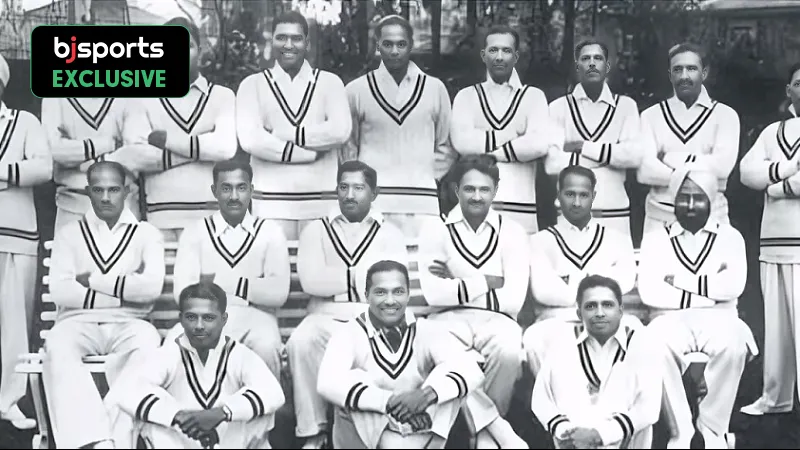
June 25, 1932, occupies a unique place in Indian cricket history. On that day, India played its first Test match, taking the field against England at Lord’s and becoming the sixth nation to enter Test cricket. The result was a 158-run defeat, but the significance of the occasion extended far beyond the scoreline. It marked the beginning of India’s journey in international cricket, a journey that would eventually transform the country into one of the game’s leading powers.
India’s admission into Test cricket was the culmination of years of effort by administrators, patrons and players who sought recognition at the highest level. The team that arrived in England in 1932 travelled under the title of All-India and embarked on an extensive tour featuring first-class fixtures across the country. The solitary Test at Lord’s was the centrepiece of that tour and represented India’s first official appearance in international cricket.
Although the Maharaja of Porbandar was the nominal captain of the touring party, C.K. Nayudu led India in the Test match. Nayudu was already one of the most respected cricketers in the country and became the first man to captain India in Test cricket. His appointment symbolised a gradual shift from patronage towards cricketing merit, even as the sport in India remained deeply influenced by the social realities of the era.
England won the toss and batted first, but India immediately demonstrated that they belonged on the international stage. Fast bowler Mohammad Nissar produced a stirring opening spell and removed both Percy Holmes and Herbert Sutcliffe early. England were reduced to 19 for 3, a remarkable position against one of the strongest sides in world cricket. Nissar’s pace and aggression surprised the home team and provided India with a memorable start to their Test history.
England eventually recovered to post 259, while India replied with 189. Naoomal Jeoomal top-scored with 33 and became India’s first opening batter in Test cricket, while wicketkeeper Janardan Navle faced the first ball of India’s Test history. Despite conceding a first-innings lead, India earned considerable respect for their competitiveness and discipline.
Set a challenging target after England declared their second innings at 275 for 8, India fought hard but were dismissed for 187. England secured victory by 158 runs, yet the margin scarcely reflected the impression India had made. For a side playing its first Test against an established opponent in unfamiliar conditions, there were enough moments to suggest a promising future.
Looking back, the match is remembered less for the result and more for what it represented. It was the first chapter of a story that would span generations, from C.K. Nayudu to Sunil Gavaskar, Sachin Tendulkar and beyond. Every milestone achieved by Indian cricket can be traced to that summer day at Lord’s when a new Test nation took its first steps onto the world stage. Nearly a century later, India’s international odyssey still begins with June 25, 1932.
Disclaimer: This Exclusive News is based on the author’s understanding, analysis, and instinct. As you review this information, consider the points mentioned and form your own conclusions.
 Top 3 Wicket-Takers of TNPL 2026 After League Stage
 Top 3 Run-Scorers of TNPL 2026 After League Stage
 Top 3 Player Battles to Watch Out for in Match 15 of CPL 2026 between Guyana Amazon Warriors and Antigua and Barbuda Falcons
 Top 3 Player Battles to Watch Out for in Eliminator Match of TNPL 2026 between IDream Tiruppur Tamizhans and Vida Kovai Kings