
Sri Lanka didn’t fall apart dramatically in front of a packed stadium in Colombo; instead, they crumbled quietly and in frustration. Although the Premadasa pitch had good grip, plenty of time to bat in, and an illusion of control at the start, by the time Sri Lanka were 134 for four, with Charith Asalanka and Dhananjaya de Silva looking solid, it was reasonable to expect that Sri Lanka would have enough runs to put up a respectable defense. However, England never panicked and simply waited for Sri Lanka to make their next move. It was in modern one-day international cricket, where hesitation is lethal, that Sri Lanka ultimately fell.
Sri Lanka Built Starts but Never Built Pressure
This batting performance was completely wasted during the middle overs. The innings is quite similar to an opening paragraph that has great promise, but ultimately, nothing comes of it. A total of five batsmen managed to score over 20, yet not one was able to manage to pass 50. With 45 (off 64) from Asalanka and 40 (off 59) from De Silva both being solid but by no means dominating performances, Sri Lanka made their way through the 25 middle overs (overs 15 – 40) without ever having full control of the game, as the English bowlers in particular Adil Rashid and Liam Dawson controlled the tempo at which the game progressed. The batting team consistently rotated the strike; it lacked impact, boundaries became increasingly difficult to find, and there was a complete lack of willingness to take risks against a bowling unit that included Will Jacks and Joe Root.
Joe Root Quietly Took the Match Away
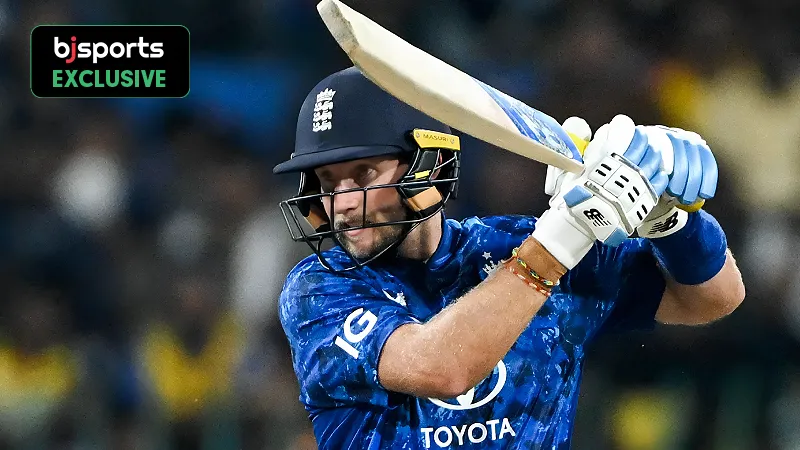
Joe Root didn’t knock Sri Lanka’s spirits; he killed them slowly through control. He had started this process long before picking up the bat. He removed Dunith Wellalage and Asitha Fernando with the off-spin that meant Sri Lanka would be bowled out for something close to what they could have been if they had fought hard for an overly large total. That then gave way to the big innings that defined the chase. A 75-run inning off 90 deliveries by Joe Root is an example of how one should play ODI cricket, find gaps and kill the pressure so that you don’t let the required run rate climb too high. Through rotating through Duckett and Brook, Root played the anchor role in the game with almost clinical composure. When he was dismissed in the 41st over, England still needed nothing more than to go through the motions.
Sri Lanka Failed to Adapt Once England Settled
The early fall of wickets provided some optimism for the possibility of an alternative ending for Sri Lanka; however, the opportunity to produce a second half of the game did not exist. Once Root had established himself at the crease, the batting plans of Sri Lanka were made flat by England’s bowlers. Dunith Wellalage bowled 10 respectable overs of bowling with little or no reward, and Asalanka’s economical bowling asked for attacking field positions that never came into existence. The singles were being given away easily, particularly square of the wicket to enable England to cruise through the middle overs of the match. Although Jos Buttler came in when there was still a contest existing on paper, but not in terms of the execution, his unbeaten 33 runs off 21 deliveries showed what was lacking from Sri Lanka in relation to their blueprint for the death overs.
FAQs
Why was 219 not enough for Sri Lanka?
Because on a slow Colombo pitch, it allowed England to control the chase without scoreboard pressure.
Who was the biggest difference-maker in the match?
Joe Root, for his decisive impact with both bat and ball.
What hurt Sri Lanka the most tactically?
Their inability to accelerate with the bat and apply sustained pressure during the middle overs.
Disclaimer: This Exclusive News is based on the author’s understanding, analysis, and instinct. As you review this information, consider the points mentioned and form your own conclusions.
 OTD Steve Tikolo, the Standard-Bearer of Kenyan Cricket, Was Born
 OTD 2025: Hazlewood’s Five-For Caps Australia’s Hard-Fought Bridgetown Triumph
 OTD 1934: Hedley Verity’s Lord’s Masterpiece That Brought Australia to Their Knees
 On This Day: India’s World Cup Triumph in 1983